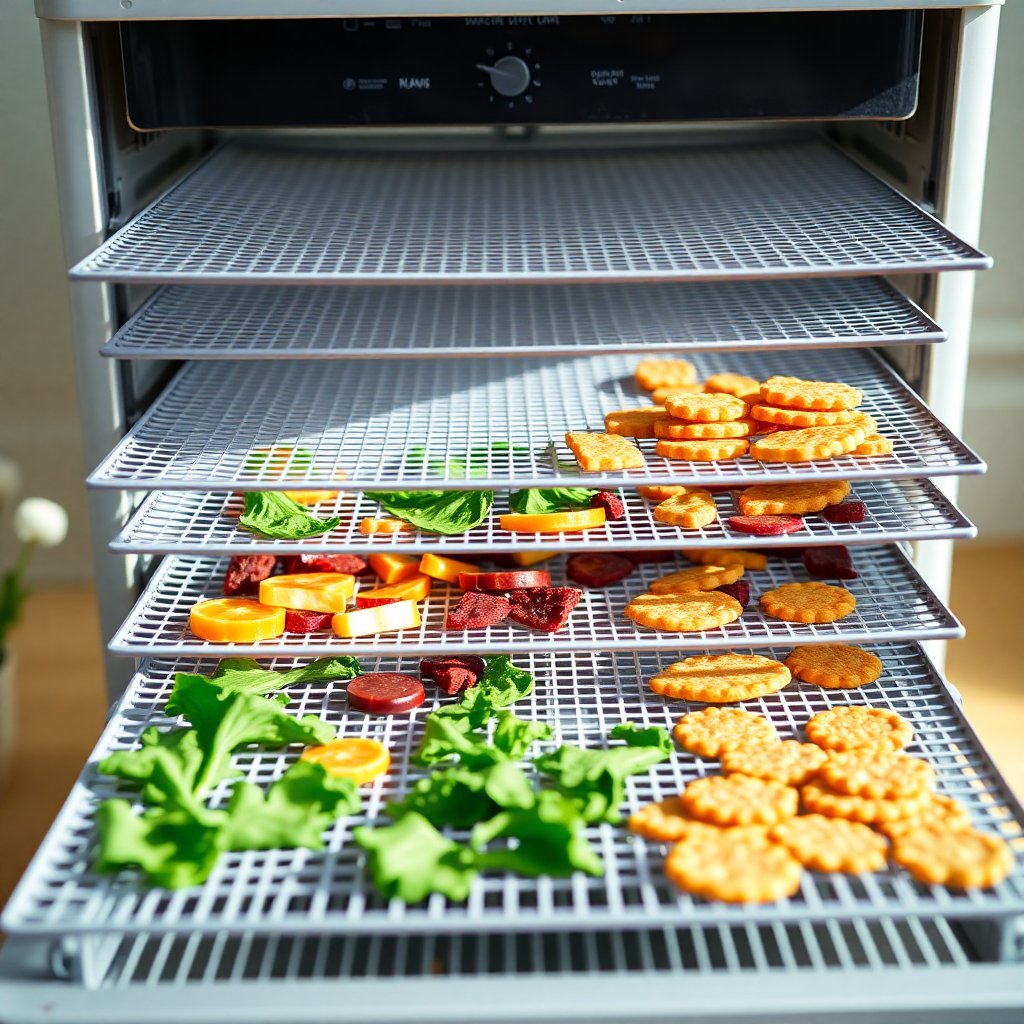
A dehydrator sits unused in a lot of raw vegan kitchens because the recipes feel complicated. They're not. Here are five that become weekly staples within a month of owning one — plus everything you need to know about equipment, technique, and why dehydrating is the raw vegan's most underused tool.
Why a Dehydrator Changes Your Raw Kitchen
Before we get into the recipes, it's worth understanding what a dehydrator actually does for raw food. Dehydrating at 115°F or below removes moisture while keeping food temperatures low enough to preserve digestive enzymes — the key distinction from baking or roasting.
The result: crispy, shelf-stable foods that taste like cooked snacks but retain the nutritional profile of raw ones. Kale chips that crunch. Crackers that snap. Cookies that hold their shape. All without an oven.
A good dehydrator makes this practical. The Excalibur is the gold standard — horizontal airflow means consistent drying across all trays, no rotating required.
→ Shop Excalibur dehydrators on Amazon
For a lighter investment, vertical-flow units from Nesco and similar brands work well for simple preparations, though they require rotating trays for even results.
→ Shop budget food dehydrators on Amazon
1. Kale Chips
The most-made dehydrator recipe for a reason. Done right, they're genuinely addictive — lighter and crispier than anything you can bake, with more flavor.
Ingredients:
- 1 large bunch curly kale, stems removed, torn into pieces
- 2 tbsp olive oil (or 1/4 cup cashew cream for a cheesy version)
- 1 tsp sea salt
- 1 tsp garlic powder
- Optional: 2 tbsp nutritional yeast for cheesy flavor
Method: Massage oil and seasoning into kale pieces until fully coated — really work it in. Spread in a single layer on dehydrator trays without overlapping. Dehydrate at 115°F for 4–6 hours until crispy. If using cashew cream base, expect 6–8 hours as it's wetter.
Storage: Airtight container, up to 1 week (if they last that long).
Variations to try: Lemon-pepper, sun-dried tomato, spicy cayenne with lime. Once you have the base technique down, the flavor possibilities are endless.
2. Raw Flax Crackers
The raw equivalent of a cracker that actually crunches — better texture than anything you can buy in a box, and completely customizable.
Ingredients:
- 2 cups ground flaxseeds (ground blends better but whole works)
- 1/2 cup water
- 1/4 cup chopped sun-dried tomatoes
- 1 clove garlic, minced
- 1 tsp sea salt
- Fresh herbs (rosemary and thyme are excellent)
Method: Mix flaxseeds and water, let sit 10 minutes until gel forms. Mix in remaining ingredients. Spread 1/4" thick on a non-stick dehydrator sheet. Score into cracker shapes before drying — much easier than cutting afterwards. Dehydrate at 115°F for 6–8 hours, flip halfway (peel off non-stick sheet), continue 2–4 more hours until crisp throughout.
Storage: Airtight container, 2 weeks.
Paraflexx non-stick sheets are essential for this recipe — standard mesh trays won't work for wet preparations.
→ Shop Paraflexx dehydrator sheets on Amazon
3. Raw Granola
Better than baked — chewier, nuttier, and keeps enzymes intact. This becomes a meal in itself with nut milk poured over.
Ingredients:
- 2 cups rolled oats (commonly used in raw kitchens)
- 1 cup pecans or walnuts, roughly chopped
- 1/2 cup pumpkin seeds
- 1/2 cup raisins
- 1/4 cup raw honey or maple syrup
- 2 tbsp coconut oil (melted)
- 1 tsp cinnamon
- 1 tsp vanilla
- Pinch of salt
Method: Mix all ingredients until fully coated. Spread on dehydrator tray in an even layer — about 1/2" thick for clumped granola, thinner for looser texture. Dehydrate at 115°F for 8–12 hours, stirring once halfway, until dry and clumped.
Storage: Mason jar, 3 weeks.
Pro tip: Add activated buckwheat groats (soaked, then dehydrated separately first) for extra crunch and genuine raw grain content.
4. Fruit Leather
Kids love it. Adults can't stop eating it. Homemade fruit leather has none of the added sugar or preservatives of commercial versions — just pure concentrated fruit flavor.
Ingredients:
- 4 cups fresh or frozen mango, strawberries, or mixed berries
- 2 tbsp lemon juice
- Optional: 2 tbsp raw honey
Method: Blend fruit until completely smooth — no chunks. Pour onto a non-stick dehydrator sheet and spread evenly to about 1/4" thickness. Don't go thinner or it will crack; don't go thicker or it won't dry through. Dehydrate at 135°F (slightly above raw temperature, but the brief time at this temperature is acceptable for most raw practitioners) for 6–8 hours until the leather peels cleanly but stays flexible.
Cut into strips while slightly warm — much easier than when fully cooled. Roll in parchment paper to store.
Storage: Wrapped in parchment, up to 2 weeks at room temperature, longer in the refrigerator.
5. Raw Energy Cookies (Date & Nut)
No baking, no heating above 115°F — these are genuinely raw. They hold their shape after dehydrating and have a satisfying, chewy texture that makes them feel like a real cookie.
Ingredients:
- 1 cup medjool dates, pitted
- 1 cup walnuts
- 1/2 cup rolled oats
- 2 tbsp raw cacao powder
- 1 tsp vanilla
- Pinch of sea salt
Method: Process dates in food processor until paste forms. Add remaining ingredients, pulse until combined but still textured — you want some nut pieces, not a uniform paste. Scoop into rounds (1.5" diameter) using a cookie scoop or tablespoon, slightly flatten. Dehydrate at 115°F for 4–6 hours until set but still chewy inside.
Storage: Airtight container, 2 weeks refrigerated.
A good food processor makes this much faster. The S-blade works best for this type of preparation.
→ Shop food processors for raw vegan prep on Amazon
Dehydrator Buying Guide: What Actually Matters
Not all dehydrators are created equal. Here's what to look for:
Horizontal airflow vs. vertical. Excalibur-style horizontal units dry everything evenly without rotating trays. Cheaper vertical units push air up from the bottom — outer trays dry faster than inner ones. For any volume of cooking, horizontal is worth it.
Tray capacity. The 9-tray Excalibur is the most popular size for home use — enough to do a full batch of granola, crackers, AND fruit leather simultaneously. The 5-tray is fine for occasional use.
Temperature control. A thermostat that goes below 115°F is required for raw food work. Some budget units have only a single temperature setting that runs too hot.
Timer. Useful for long overnight runs — set it and wake up to finished crackers without over-drying.
| Dehydrator | Type | Trays | Best For | |---|---|---|---| | Excalibur 9-tray | Horizontal | 9 | Serious raw kitchen, large batches | | Excalibur 5-tray | Horizontal | 5 | Regular home use | | Nesco Snackmaster | Vertical | 5 | Budget entry point | | Cosori Premium | Vertical | 6 | Mid-range with timer |
→ Shop Excalibur 9-tray dehydrators on Amazon
FAQ
What temperature should I use for raw food dehydrating? 115°F (46°C) is the standard upper limit for maintaining enzymes and keeping food technically "raw." Some preparations (like fruit leather) are done at slightly higher temperatures for shorter times — this is a personal choice based on your raw food philosophy.
Do I need special accessories? Non-stick dehydrator sheets (Paraflexx brand for Excalibur, or generic equivalents) are essential for anything wet: fruit leather, crackers, granola bars. Mesh screens that come with most dehydrators work for kale chips and granola.
How do I know when dehydrated food is done? It should feel dry to the touch with no tacky spots. Crackers and chips should snap, not bend. Fruit leather should peel cleanly from the sheet. Cookies should be firm on the outside but can be slightly chewy inside.
Can I use an oven instead? You can set an oven to its lowest temperature with the door slightly cracked, but most ovens run at 170°F minimum — above the raw threshold. The airflow is also less consistent. For occasional use it works; for regular raw cooking a dehydrator is worth it.
How long do dehydrated foods last? Most dehydrated raw foods last 1–3 weeks at room temperature in an airtight container. Fruit leather and more moist preparations are on the shorter end. Crackers and fully dehydrated items last longest. Refrigeration extends everything significantly.
The Bottom Line
These five recipes are genuinely practical — not showpiece cooking you'll make once and forget. Once you've mastered kale chips and flax crackers, you'll find yourself reaching for the dehydrator multiple times a week. It transforms raw eating from "salads and smoothies" into a full range of textures and satisfying snacks.
The equipment investment pays for itself in the first few months of regular use. Start with a mid-range unit if budget is a concern, and upgrade to an Excalibur when you're doing larger batches.
→ Browse all dehydrators on Amazon
As an Amazon Associate we earn from qualifying purchases. This article contains affiliate links; if you buy through them we may earn a small commission at no additional cost to you.