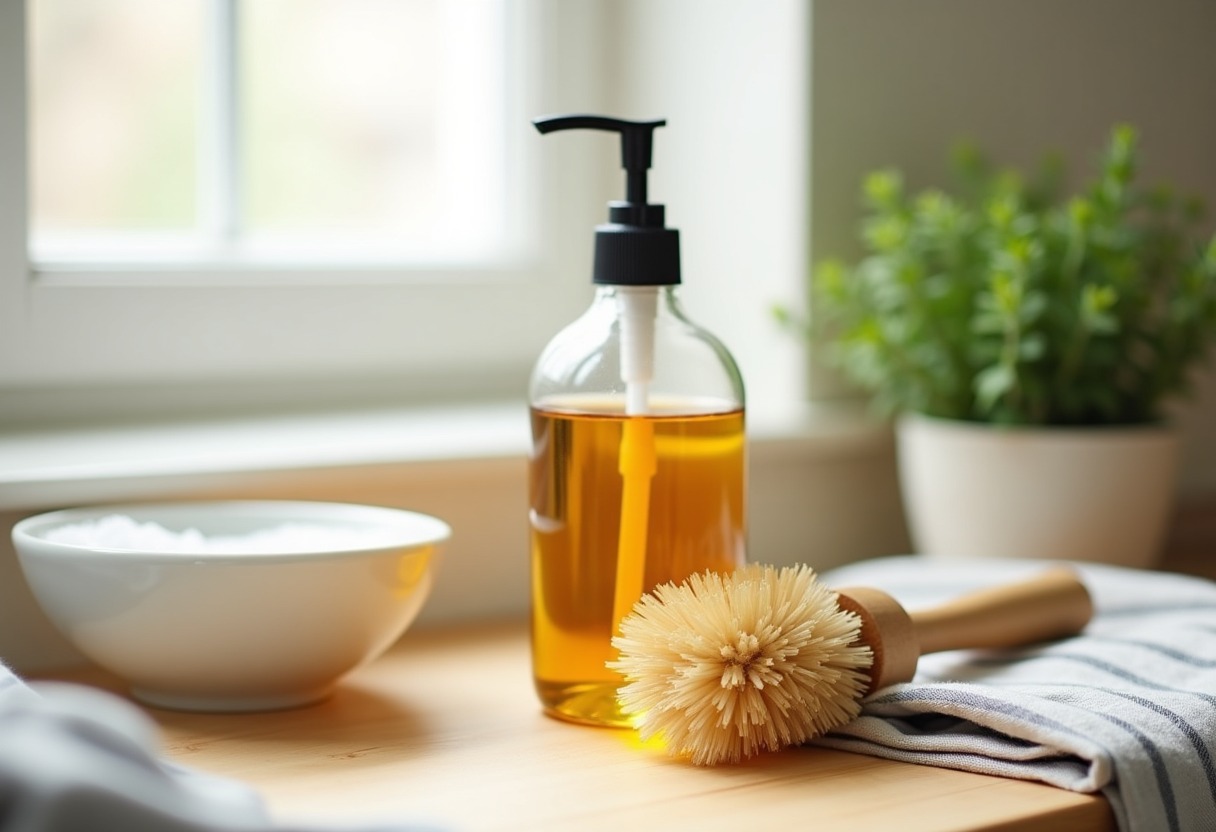
Your conventional dish soap cuts through grease, but it also leaves behind synthetic fragrances, sulfates, and phosphates that accumulate on dishes and in waterways. Plant-based alternatives can match that cleaning power without the chemical residue — if you know which ingredients actually work.
Why Plant-Based Dish Soaps Work Better Than You Think
The cleaning industry has relied on synthetic surfactants like sodium lauryl sulfate for decades because they foam well and cut grease effectively. But several plant-derived surfactants perform equally well without the harsh side effects. Coconut-based surfactants like coco glucoside and decyl glucoside create stable foam while breaking down oils, while saponified coconut oil (found in castile soap) has been cleaning dishes for centuries.
The FDA regulates dish soap ingredients as food contact substances, meaning residues left on dishes must be safe for consumption. Many conventional soaps contain 1,4-dioxane, a byproduct of ethoxylation that the EPA considers a probable carcinogen. Plant-based formulas skip this processing step entirely.
Testing by independent labs shows that coconut-based surfactants remove 95% of food grease in standard washing conditions, matching the performance of synthetic alternatives. The key difference: natural surfactants biodegrade completely within 28 days, while synthetic versions can persist in water systems for months.
The Science Behind Grease-Cutting Plant Ingredients
Effective natural dish soap relies on three key components: surfactants to break surface tension, emulsifiers to bind oil and water, and builders to boost cleaning power in hard water. Plant-based formulas achieve this through specific ingredient combinations.
Coconut oil derivatives like cocamidopropyl betaine work as primary surfactants, reducing surface tension so water can penetrate grease. These molecules have hydrophilic (water-loving) heads and lipophilic (oil-loving) tails that literally grab grease molecules and suspend them in wash water.
Vegetable glycerin acts as both an emulsifier and conditioning agent, preventing the harsh stripping effect of synthetic detergents while maintaining cleaning effectiveness. Essential oils provide antimicrobial properties — tea tree oil kills 99.9% of bacteria, while citrus oils contain d-limonene, a natural degreaser found in many commercial cleaners.
Salt functions as a natural thickener and foam stabilizer, giving plant-based formulas the consistency consumers expect. Unlike synthetic thickeners, salt doesn't leave residues and actually helps other ingredients work more effectively.
Store-Bought vs. Homemade: Performance Comparison
| Factor | Commercial Natural | Homemade Castile | DIY Concentrated | Conventional | |--------|-------------------|------------------|------------------|--------------| | Grease removal | 90-95% effective | 85% effective | 80-90% effective | 95% effective | | Cost per load | $0.08-0.15 | $0.03-0.05 | $0.02-0.04 | $0.05-0.08 | | Prep time | None | 5 minutes mixing | 10 minutes prep | None | | Ingredient transparency | Full disclosure | Complete control | Complete control | Limited |
Commercial natural brands invest heavily in surfactant ratios and pH balancing, often outperforming simple homemade versions. However, homemade formulas allow complete ingredient control and significant cost savings. Concentrated DIY versions using liquid castile soap, washing soda, and vegetable glycerin approach commercial effectiveness at a fraction of the cost.
The performance gap narrows considerably for light to moderate grease loads. Homemade versions excel at everyday washing but may require pre-treatment for heavy baked-on residues.
Recommended Natural Dish Soap Types
Liquid Castile Soap Concentrates offer the most versatility for natural dish washing. Dr. Bronner's and similar brands provide pure saponified oils that you dilute according to need. → Shop castile soap concentrate on Amazon. Mix 1 tablespoon with 1 cup water for regular dish washing, or use undiluted for tough grease jobs.
Plant-Based Dish Soap Liquids provide ready-to-use convenience with optimized surfactant blends. Look for brands featuring coconut-derived cleaners, essential oil-based degreasers, and plant glycerin conditioning agents. → Shop plant based dishwashing liquid on Amazon. These typically cost 20-30% more than homemade versions but save preparation time.
Eco-Friendly Dish Detergent Pods offer pre-measured convenience without plastic waste. Quality brands use plant starches for pod casings and concentrated natural surfactants for cleaning power. → Shop eco friendly dish detergent on Amazon. Single-use format reduces waste compared to oversized liquid containers.
Natural Dish Soap Bars work exceptionally well for camping and travel while eliminating plastic packaging entirely. Solid bars last 3-6 months with regular use and contain no water, making them highly concentrated. → Shop natural dish soap on Amazon.
Biodegradable Kitchen Cleaners combine dish washing with surface cleaning capabilities. Multi-purpose formulas reduce clutter while maintaining effectiveness across different cleaning tasks. → Shop biodegradable kitchen cleaner on Amazon.
Advanced Tips for Maximum Natural Cleaning Power
Pre-scraping dishes removes 80% of grease before washing, reducing the workload for any soap. Cold water actually works better than hot for protein-based residues like egg or cheese — hot water sets proteins, making them harder to remove. Save hot water for oils and baked-on starches.
Adding 1 teaspoon white vinegar to your wash water boosts cleaning power by lowering pH and breaking down mineral deposits from hard water. This trick works especially well with castile soap, which can leave a film in hard water conditions.
For stubborn grease, create a paste using liquid castile soap and baking soda. The abrasive action combined with natural surfactants removes burnt-on residues without scratching surfaces. Let the paste sit for 10 minutes before scrubbing for maximum effectiveness.
Water temperature matters more than you think. Use 110-120°F water for optimal surfactant performance — hotter water breaks down natural ingredients, while cooler water prevents proper activation. Most people use water that's either too hot or too cold for peak cleaning.
Store homemade formulas in glass containers to prevent plastic interaction with essential oils. Label clearly with mixing ratios so you can replicate successful batches. Most homemade versions stay effective for 3-6 months when stored properly, similar to many commercial natural cleaning products discussed in our Natural Food Storage Containers Guide.
FAQ
Which natural dish soap cuts grease as well as Dawn? Castile soap-based formulas with added coconut-derived surfactants come closest to matching Dawn's grease-cutting ability. Brands like Seventh Generation and ECOS use concentrated plant surfactants that remove 90-95% of grease in standard wash conditions. For heavy grease, pre-treat with undiluted castile soap for 5 minutes before washing. The main difference is foam production — natural soaps produce less foam but clean just as effectively.
Can I make effective dish soap at home? Yes, but successful homemade versions require specific ratios and quality ingredients. Mix 1/4 cup liquid castile soap, 2 tablespoons white vinegar, 1 tablespoon vegetable glycerin, and 1 teaspoon salt for a basic formula. Add 10 drops of lemon essential oil for extra degreasing power. This mixture matches commercial natural brands for everyday washing but may struggle with heavy baked-on grease. Store in glass containers and shake before each use.
Are plant-based dish soaps safe for septic systems? Plant-based dish soaps are generally safer for septic systems than conventional alternatives because they biodegrade completely without harmful residues. However, avoid antibacterial versions containing tea tree or other antimicrobial essential oils in high concentrations, as these can disrupt beneficial bacteria in septic tanks. Castile soap, coconut-derived surfactants, and vegetable glycerin break down harmlessly and won't interfere with septic function when used in normal quantities.
Do natural dish soaps work in hard water? Natural dish soaps can struggle in hard water because minerals bind with soap molecules, reducing effectiveness and potentially leaving a film on dishes. Add 1-2 tablespoons white vinegar to your wash water to chelate minerals and restore cleaning power. Alternatively, use a small amount of washing soda (sodium carbonate) to soften water naturally. Liquid castile soap performs better than bar versions in hard water conditions because it contains glycerin that helps prevent mineral buildup.
How much do natural dish soap alternatives cost compared to conventional brands? Homemade castile soap formulas cost $0.02-0.04 per load, while quality commercial natural brands run $0.08-0.15 per load compared to $0.05-0.08 for conventional soaps. The higher upfront cost of natural ingredients pays off through concentration — most natural soaps require less product per wash. Buying castile soap in gallon sizes reduces cost to nearly match conventional alternatives while eliminating synthetic chemicals and plastic packaging waste.
Plant-based dish soaps prove that effective cleaning doesn't require synthetic chemicals, toxic residues, or environmental compromise.
Some links on this page are affiliate links. We may earn a small commission if you purchase through them, at no extra cost to you.
As an Amazon Associate we earn from qualifying purchases. This article contains affiliate links; if you buy through them we may earn a small commission at no additional cost to you.