Most conventional laundry detergents pack 20-30 synthetic ingredients into every jug, including optical brighteners that coat fabric fibers to fake brightness and synthetic fragrances that linger for days. Switching to natural laundry detergent alternatives means clothes get genuinely clean without residue buildup, hormone-disrupting chemicals, or that chemical smell masquerading as "fresh."
Why Natural Laundry Detergent Alternatives Actually Matter
The Environmental Protection Agency doesn't require full ingredient disclosure for cleaning products, which means brands can hide fragrance chemicals, preservatives, and surfactants behind vague terms like "cleaning agents." You're washing these compounds into fabric that sits against your skin 16+ hours daily.
Natural alternatives use saponins (plant-based surfactants), washing soda (sodium carbonate), and soap from actual oils instead of petroleum-derived detergents. They rinse cleaner because they don't contain polymers designed to stick to fabric. That stiffness conventional detergent causes? That's chemical buildup, not clean.
The cleaning mechanism differs too. Synthetic detergents use harsh surfactants that strip everything—including natural oils from wool and silk. Plant-based options lift dirt through gentler saponin action, which explains why natural laundry solutions work better for delicates and hand-knits.
Soap Nuts: The Original Natural Laundry Solution
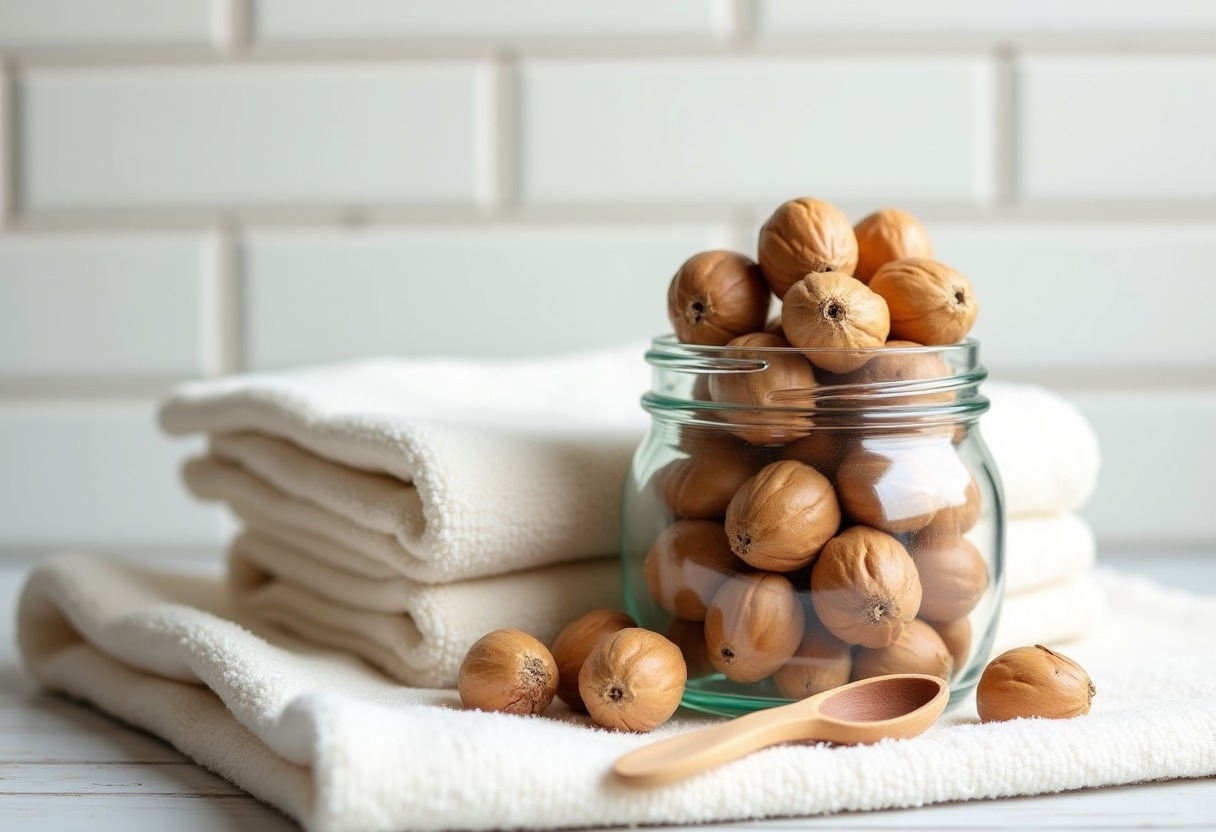
Soap nuts (actually dried berries from Sapindus mukorossi trees) contain 10-15% saponins that release when agitated in water. Drop 4-5 shells in a cotton bag, toss in the washer, and the saponins create mild suds that clean without leaving residue.
→ Shop soap nuts laundry on Amazon
They work in cold water, which matters because hot water washing accounts for 90% of energy use in laundry. Each batch of soap nuts handles 4-7 loads before depleting—squeeze the bag mid-cycle to check if it still produces suds. When they stop foaming, compost them.
The drawbacks: soap nuts don't tackle heavy stains or grease alone. They excel at maintenance washing (daily clothes, sheets, towels) but need help with mud, oil, or food stains. Pre-treat spots with a paste of washing soda and water, or add a tablespoon of oxygen bleach to the load.
Store soap nuts in an airtight container. Humidity causes them to absorb moisture and start releasing saponins prematurely, which leaves you with sticky, less effective shells.
Eco-Friendly Laundry Powders and Concentrated Strips
Natural laundry powders typically combine washing soda, baking soda, and plant-derived surfactants from coconut or palm kernel oil. → Shop natural laundry detergent powder on Amazon They dissolve easily in warm water but may leave white residue in cold washes—dissolve the powder in a cup of hot water first, then add to the machine.
Laundry strips (thin sheets of concentrated detergent) emerged as the zero-waste darling, but quality varies wildly. Good ones use plant-based surfactants and dissolve completely in cold water. Cheap versions contain polyvinyl alcohol (PVA), a synthetic polymer that technically biodegrades but takes months and leaves microplastic-like residue. Check ingredient lists for "PVA" or "PVOH"—if it's listed, skip it. → Shop laundry detergent strips on Amazon
Concentrated oxygen bleach powder (sodium percarbonate) works as both a booster and standalone cleaner for whites and heavily soiled loads. Mix 1-2 tablespoons per load directly into the drum. This compound releases hydrogen peroxide when dissolved, which oxidizes stains without chlorine's harshness.
| Product Type | Cost Per Load | Best For | Limitations | |--------------|---------------|----------|-------------| | Soap nuts | $0.08-0.15 | Delicates, regular washing, cold water | Poor stain removal, slower in hard water | | Natural powder | $0.18-0.35 | All-purpose, hot or warm water | Can leave residue in cold; bulky packaging | | Laundry strips | $0.25-0.45 | Travel, small spaces, convenience | Some contain PVA; pricier per load | | DIY powder blend | $0.05-0.12 | Budget-conscious, customizable scent | Requires mixing; washing soda can irritate skin |
DIY Laundry Detergent That Actually Cleans
The classic DIY recipe combines washing soda, borax, and grated bar soap—but borax raises questions about reproductive toxicity, and bar soap creates buildup in high-efficiency washers. A better formula uses three ingredients: washing soda, baking soda, and oxygen bleach.
Basic DIY Powder Recipe:
- 2 cups washing soda → Shop washing soda bulk on Amazon
- 2 cups baking soda
- 1 cup oxygen bleach powder
Mix thoroughly and store in an airtight glass jar. Use 2 tablespoons per regular load, 3 for heavily soiled. The washing soda (sodium carbonate) softens water and breaks down oils. Baking soda (sodium bicarbonate) deodorizes and balances pH. Oxygen bleach handles stains and whitening.
For liquid detergent, dissolve 1 tablespoon of washing soda in 1 gallon of hot water, then add 1/4 cup liquid castile soap. → Shop castile soap liquid on Amazon This creates a low-sudsing liquid suitable for HE washers. Shake before each use—separation is normal. Use 1/4 cup per load.
Essential oils don't clean, but 10-15 drops of lavender or tea tree per batch adds scent and mild antimicrobial properties. If you're already exploring natural home products, the same mindset applies here as it does with Natural Dish Soap Alternatives—read labels, avoid synthetics, prioritize simple ingredient lists.
What Most Natural Laundry Guides Won't Tell You
Hard water destroys the effectiveness of natural detergents. Minerals bind with soap and saponins, creating that gray film on clothes and reducing cleaning power by 30-40%. If your water tests above 120 ppm hardness, add 1/4 cup white vinegar to the rinse cycle or install a water softener. The vinegar dissolves mineral deposits without harming fabric.
High-efficiency washers need low-sudsing formulas. Traditional soap creates too many bubbles, which triggers the HE sensor to add extra rinse cycles and waste water. Soap nuts and washing soda-based DIY recipes work perfectly in HE machines because they produce minimal suds while still cleaning effectively.
Strip washing removes years of detergent and fabric softener buildup. Fill a bathtub with hot water, add 1/4 cup washing soda, 1/4 cup borax (optional), and 1/2 cup oxygen bleach. Submerge clean laundry and soak 4-6 hours, stirring occasionally. The water turns gray or brown as residue releases. Rinse thoroughly and run through a regular wash cycle. Do this once when switching to natural detergent, then once yearly for towels and workout gear.
Temperature matters less than you'd think. Cold water washing (60°F or below) cleans effectively for most loads when using proper detergent. Hot water (130°F+) kills dust mites and sanitizes, but it also sets protein-based stains like blood and sweat. Warm water (90-110°F) offers middle ground for moderately soiled items.
Skip fabric softener entirely. It coats fibers with waxy compounds that reduce absorbency—terrible for towels and workout clothes. Use 1/2 cup white vinegar in the rinse cycle instead. It softens naturally, removes soap residue, and evaporates completely so clothes don't smell like vinegar.
FAQ
Do soap nuts actually clean clothes or just make them smell different?
Soap nuts clean through saponin surfactants that lift dirt and oils from fabric, not through fragrance. They work well for lightly soiled loads, everyday clothing, and maintenance washing. However, they struggle with heavy stains, grease, and ground-in dirt that requires stronger surfactants or enzymes. Think of soap nuts as daily maintenance cleaners, not heavy-duty stain removers. For best results, pre-treat stains with a washing soda paste before washing with soap nuts, or add oxygen bleach to the load for extra cleaning power.
Can I use natural laundry detergent alternatives in HE washing machines?
Yes, but choose low-sudsing options specifically. Soap nuts, washing soda-based DIY powder, and most natural commercial powders work perfectly in HE machines because they create minimal bubbles while cleaning effectively. Avoid recipes that include grated bar soap or excessive castile soap, as these produce too many suds and trigger extra rinse cycles. HE machines use 20-40% less water than traditional washers, so concentrated formulas perform better. Use half the amount you'd use in a standard machine and add directly to the drum, not the dispenser drawer, for best results.
How much does switching to natural laundry detergent alternatives actually save?
DIY washing soda-based powder costs roughly $0.05-0.12 per load compared to $0.20-0.35 for conventional liquid detergent. Soap nuts run $0.08-0.15 per load. For a household doing 8 loads weekly, switching to DIY powder saves $60-80 annually. Soap nuts save $40-60 yearly. Natural commercial powders cost slightly more than DIY but less than conventional brands. The bigger savings come from eliminating fabric softener (replaced with vinegar at $0.02 per load) and reducing energy costs through effective cold-water washing. Combined, expect $100-150 annual savings for an average family.
What's the difference between washing soda and baking soda in laundry?
Washing soda (sodium carbonate) has a pH of 11 and works as a water softener, grease cutter, and stain remover. Baking soda (sodium bicarbonate) has a pH of 8 and functions as a deodorizer and mild abrasive. Washing soda is roughly 100 times more alkaline than baking soda, making it significantly more effective at cutting through oils and lifting stains. You cannot substitute one for the other in cleaning recipes—washing soda does the actual cleaning work, while baking soda handles odors and balances pH. Both work together in DIY formulas, but washing soda carries the cleaning load.
Will natural laundry alternatives work for cloth diapers and heavily soiled items?
Natural alternatives work for cloth diapers and heavy soil when formulated correctly. Use a wash routine with two cycles: first a cold rinse to flush solids, then a hot main wash with washing soda or oxygen bleach-based detergent. Soap nuts alone won't cut it for diapers—they lack the alkalinity needed to break down urine crystals and eliminate odors. A washing soda and oxygen bleach combination (2 tablespoons washing soda + 2 tablespoons oxygen bleach per load) handles the job effectively. Avoid DIY recipes containing bar soap for diapers, as they create buildup that reduces absorbency. Every 4-6 weeks, strip wash with the hot water method described earlier to prevent residue accumulation.
Natural laundry alternatives clean clothes without coating them in synthetic residue, cost less per load than conventional detergent, and work in any washing machine when matched to water temperature and soil level correctly.
Some links on this page are affiliate links. We may earn a small commission if you purchase through them, at no extra cost to you.
As an Amazon Associate we earn from qualifying purchases. This article contains affiliate links; if you buy through them we may earn a small commission at no additional cost to you.