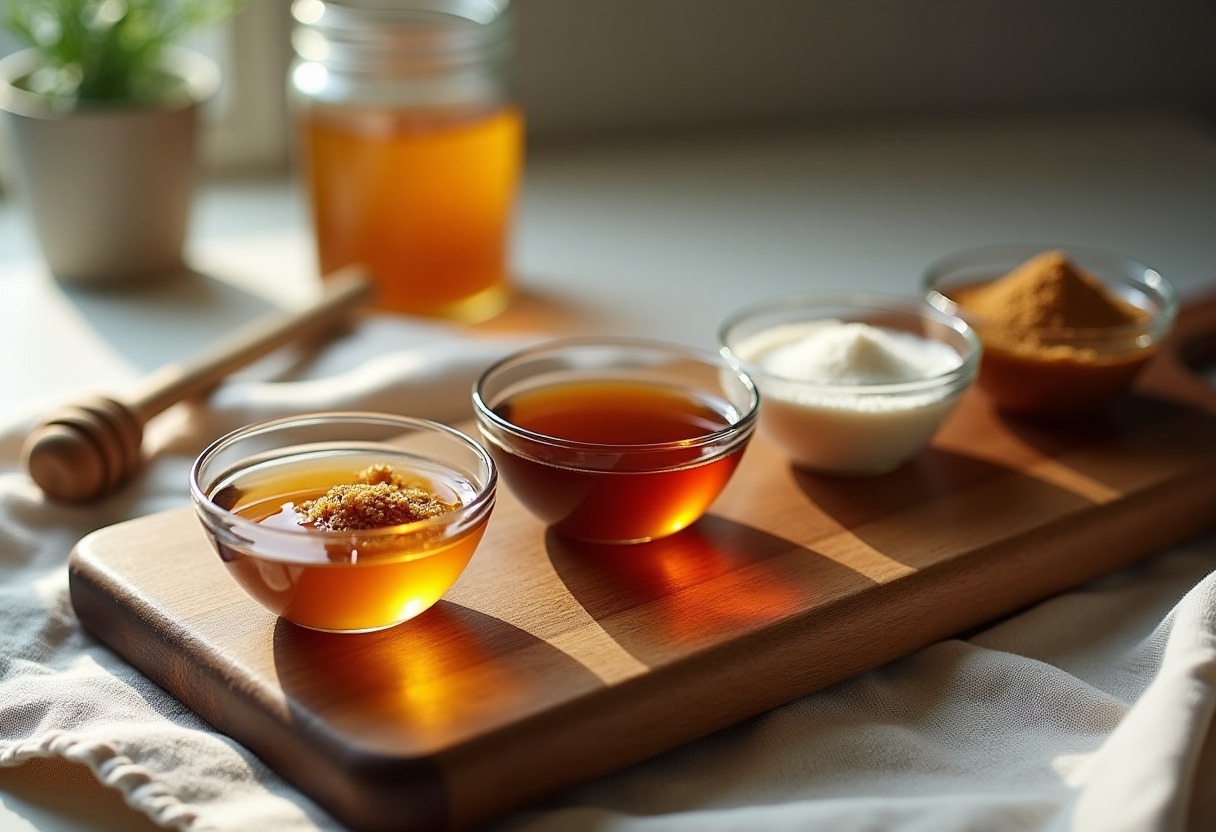
Refined white sugar is stripped of everything but pure sucrose — no minerals, no fiber, no nutrients. Whole-food sweeteners keep what refining removes: trace minerals, enzymes, antioxidants, and complex carbohydrates that affect how your body processes sugar. The difference isn't just philosophical; it's measurable in glycemic impact, nutrient density, and how these sweeteners behave in recipes.
Why Whole-Food Sweeteners Matter
The USDA FoodData Central database shows clear nutrient differences between refined and minimally processed sweeteners. Raw honey contains enzymes, antioxidants, and trace amounts of B vitamins and minerals. Pure maple syrup delivers manganese and zinc. Coconut sugar retains small amounts of iron, zinc, and potassium. White sugar? Zero micronutrients.
Glycemic index matters for blood sugar response. White sugar scores 65 on the glycemic index scale. Coconut sugar comes in around 35, honey ranges from 35-58 depending on botanical source, and whole dates sit at 42. Lower glycemic sweeteners cause slower blood sugar spikes, which means less dramatic insulin response and more stable energy.
Processing method determines what remains. Cold-extracted honey, tree-tapped maple syrup, and ground dried dates undergo minimal processing that leaves their original structure largely intact. Evaporated cane juice, marketed as "raw sugar," still goes through significant refining that strips most molasses and minerals.
Natural Sweeteners That Actually Work
Raw honey is the most versatile whole-food sweetener in your pantry. Local, unfiltered varieties contain bee pollen, propolis, and enzymes that don't survive pasteurization. Darker honeys like buckwheat or wildflower pack more antioxidants than lighter varieties. Use honey in dressings, smoothies, and baking below 350°F to preserve heat-sensitive enzymes. → Shop raw honey on Amazon
Pure maple syrup (Grade A Dark or Very Dark) contains 24 different antioxidant compounds and measurable amounts of manganese, zinc, and calcium. Real maple syrup is boiled sap from sugar maple trees, concentrated to 66% sugar content. The darker grades have stronger mineral content and more pronounced maple flavor. Use it anywhere you want liquid sweetness with depth — it works beautifully in the Best Raw Vegan Blenders 2026 for smoothies and nut milks.
Coconut sugar is dehydrated coconut palm sap, ground into granules that behave like brown sugar in recipes. It substitutes 1:1 for white sugar in most baked goods and dissolves readily in liquids. The glycemic index advantage makes it useful for anyone managing blood sugar. The flavor is mild molasses with slight caramel notes. → Shop coconut sugar on Amazon
Date sugar is literally just dried, ground dates — the whole fruit with all its fiber intact. It doesn't dissolve in liquids, which limits use in beverages but makes it excellent for baking, granola, and toppings. The fiber content means it's the highest whole-food option on this list. Blend dates into a paste for smoothies or energy balls instead of using the sugar form when you need it to incorporate fully.
Monk fruit sweetener (luo han guo) is intensely sweet without any sugar at all. The mogrosides that create sweetness don't affect blood glucose, making this useful for strict low-sugar protocols. Pure monk fruit is expensive and hard to find; most products blend it with erythritol or other sugar alcohols. Check ingredient lists carefully. The aftertaste is noticeable to some people but absent to others. → Shop monk fruit sweetener on Amazon
Sweetener Comparison: How They Stack Up
| Sweetener | Glycemic Index | Calories per Tbsp | Best Uses | Processing Level | |-----------|----------------|-------------------|-----------|------------------| | Raw Honey | 35-58 | 64 | Cold recipes, dressings, low-temp baking | Minimal (extracted, strained) | | Pure Maple Syrup | 54 | 52 | Liquids, pancakes, glazes, smoothies | Minimal (boiled sap) | | Coconut Sugar | 35 | 45 | 1:1 sugar substitute, baking, beverages | Low (dehydrated, ground) | | Date Sugar | 42 | 60 | Baking, toppings, bars (doesn't dissolve) | None (dried, ground whole fruit) | | Monk Fruit | 0 | 0 | Low-sugar diets, beverages, baking | Moderate (extracted, often blended) |
Choosing the Right Sweetener for Your Needs
Match your sweetener to your recipe's heat and texture requirements. Honey loses enzymatic benefits above 350°F but still works structurally in higher-heat baking. Maple syrup handles any temperature. Date sugar won't dissolve, so it's useless in iced tea but perfect in Best Dehydrator Recipes for fruit leathers or energy bars.
Flavor intensity varies dramatically. Blackstrap molasses tastes aggressively mineral and bitter — use it for nutritional punch in small amounts, not as primary sweetener. Coconut sugar and light maple syrup let other flavors shine. Buckwheat honey dominates anything it touches.
Check sourcing when nutrients matter. Supermarket "honey" often gets cut with corn syrup or ultrafiltrated to remove pollen. Real maple syrup says "pure maple syrup" and comes from a specific grade. If the ingredient list is longer than one item, it's not a whole-food sweetener.
Price per use guides pantry stocking. Date sugar and coconut sugar cost more per pound than refined sugar but replace it 1:1, so you're not overpaying by volume. Monk fruit is expensive but you need tiny amounts. → Shop pure maple syrup on Amazon
Start with two liquid and one granulated option. Raw honey, maple syrup, and coconut sugar cover 90% of sweetening needs in a natural foods kitchen. Add date sugar if you bake often or want the highest-fiber option. Keep monk fruit only if you're actively reducing sugar intake.
Storage and Shelf Life Details Most Posts Skip
Crystallized honey isn't spoiled — it's what raw honey naturally does. Warm the jar gently in a water bath below 110°F to reliquefy without destroying enzymes. Never microwave raw honey; the uneven heating kills everything that makes it nutritionally different from refined sugar.
Real maple syrup molds once opened unless refrigerated. That white bloom on the surface isn't harmless; toss it. Unopened jugs stored cool and dark keep for years. Opened and refrigerated, plan for six months.
Coconut sugar clumps in humidity. Store it in an airtight container, ideally with a silica packet if you live somewhere damp. A quick spin in the Best Raw Vegan Blenders 2026 breaks up clumps instantly.
Date sugar oxidizes faster than other sweeteners because it contains the whole fruit. Buy smaller quantities and use within six months. The oils in dates can go rancid, especially in warm storage.
Monk fruit sweetener is shelf-stable but the erythritol blends can absorb odors. Keep them sealed tightly away from strong-smelling pantry items like vanilla extract — speaking of which, learn to make your own at homebrewvanilla.com for baking that pairs perfectly with natural sweeteners.
FAQ
What's the healthiest natural sweetener to replace white sugar?
Date sugar wins on paper because it's the whole fruit — you get fiber, potassium, and antioxidants along with the fructose and glucose. But "healthiest" depends on your goal. If you're managing blood sugar, coconut sugar's lower glycemic index matters more. If you want enzymes and antimicrobial properties, raw honey delivers. If you're after minerals, blackstrap molasses has more iron than any other sweetener but tastes intensely bitter. The practical answer: rotate between raw honey, maple syrup, and coconut sugar based on what the recipe needs.
Can I substitute natural sweeteners 1:1 for white sugar in any recipe?
Coconut sugar works 1:1 in almost everything without changing liquid ratios. Honey and maple syrup are liquids, so you need to reduce other liquids in the recipe by about 3 tablespoons per cup of honey used, and lower oven temperature by 25°F because honey browns faster. Date sugar doesn't dissolve, so it won't work in beverages or smooth frostings. Monk fruit is 100-250 times sweeter than sugar, so it definitely doesn't substitute evenly — follow package directions for the specific blend you bought. Baking is chemistry; switching sweeteners changes moisture, browning, and structure.
Does heating honey destroy all its beneficial properties?
Temperatures above 110°F begin degrading the enzymes in raw honey, and by 150°F most enzymatic activity is gone. The antioxidants are more heat-stable but diminish at higher temperatures. If you're baking at 350°F, you're getting honey's flavor and the prebiotic oligosaccharides that survive heat, but not the live enzymes. That doesn't make cooked honey worthless — it's still less processed than white sugar — but if you want the full enzymatic benefit, use honey in no-heat applications like salad dressings, smoothies, or drizzled over already-cooked foods.
Which natural sweeteners are safe for children under one year old?
No honey for infants under 12 months, period. Raw or pasteurized doesn't matter — honey can contain Clostridium botulinum spores that adult digestive systems handle fine but infant systems cannot, potentially causing botulism. Maple syrup, date sugar, and coconut sugar are safe for babies old enough to consume solid foods, though pediatricians generally recommend limiting all added sweeteners in the first year. Natural doesn't mean necessary, especially for developing palates that haven't learned to expect sweet flavors in everything.
Do natural sweeteners cause fewer cavities than white sugar?
All fermentable carbohydrates — including honey, maple syrup, dates, and coconut sugar — feed the bacteria that produce cavity-causing acids. Honey's antimicrobial properties don't offset its sugar content enough to call it "tooth-friendly." Monk fruit doesn't feed cavity-causing bacteria because it contains no actual sugar, and erythritol (often blended with monk fruit) may actively inhibit bacterial growth. The dental reality: if it tastes sweet from sugar or sugar-like carbohydrates, it contributes to cavities. Brush after eating anything sweet, natural or not.
Switching to whole-food sweeteners means your pantry actually tastes like something beyond generic sweet — buckwheat honey in autumn squash, dark maple syrup in winter oats, wildflower honey in summer berry compotes.
Some links on this page are affiliate links. We may earn a small commission if you purchase through them, at no extra cost to you.
As an Amazon Associate we earn from qualifying purchases. This article contains affiliate links; if you buy through them we may earn a small commission at no additional cost to you.