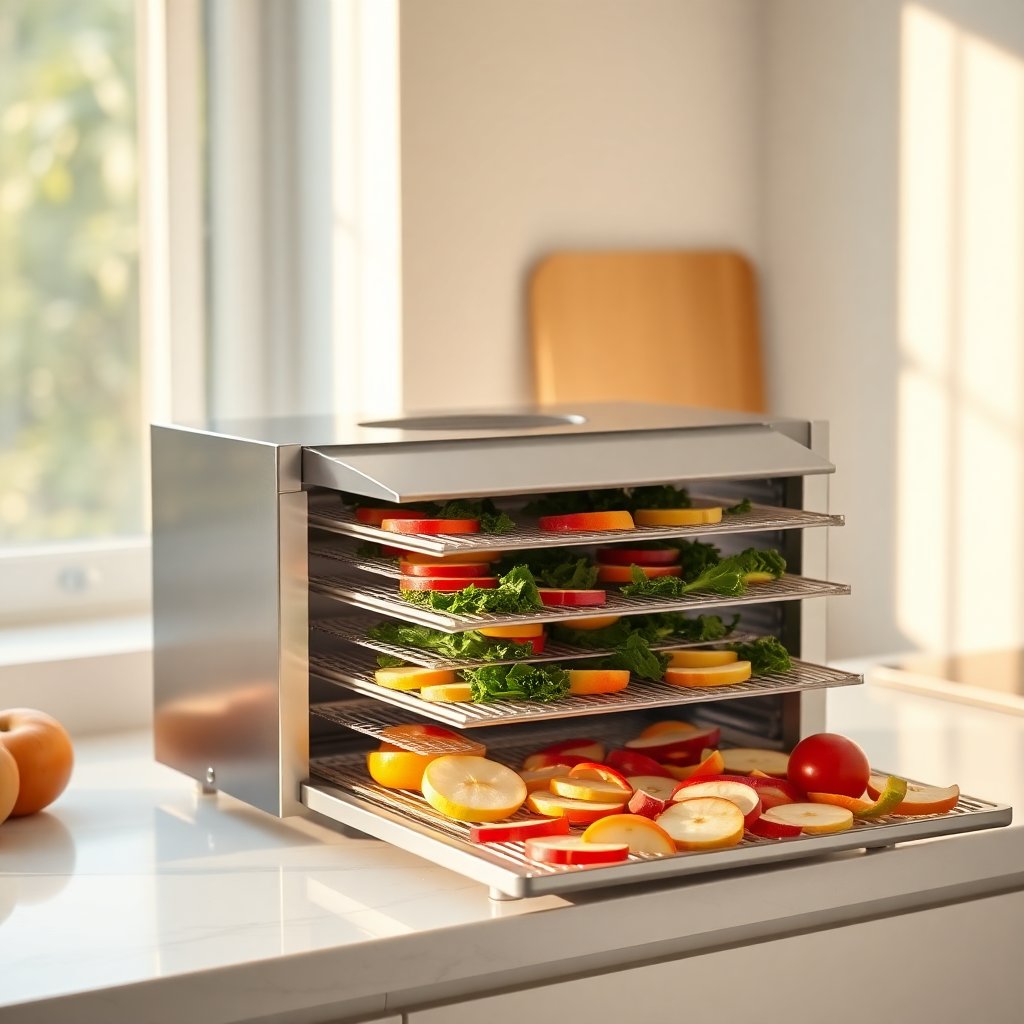
Every raw kitchen eventually hits the same wall: you have the recipes, you have the ingredients, and then you realize your oven cannot actually go low enough to make raw crackers, kale chips, or fruit leathers the way they are supposed to be made. Most kitchen ovens bottom out around 170°F, and that single number is why a dedicated dehydrator is the one appliance a raw vegan kitchen genuinely cannot fake. This guide walks through the machines that matter in 2026 — organized around the only spec that truly separates raw-food gear from everything else: a thermostat that holds under 118°F.
Why 118°F Is the Line That Matters
The whole point of raw food is preserving the enzymes and heat-sensitive nutrients that cooking destroys. In the raw-food world, 118°F is the widely used ceiling — the temperature above which many enzymes are considered to begin denaturing. Push warmer than that and, by the raw definition, the food is no longer raw.
Here is the catch most product pages gloss over: a dehydrator that lists a low setting is not the same as a dehydrator that holds it. Cheaper machines with a simple dial can overshoot their target by several degrees, and a "115°F" setting that drifts up to 125°F under load defeats the entire purpose. What you actually want is a machine with an accurate, calibrated thermostat that keeps the chamber at or below your set temperature even when it is full of wet produce.
The Tribest Sedona line is explicit about this: when you set it to the recommended 118°F, the manufacturer states the temperature will not exceed that setting, specifically to protect enzyme activity. That is the design promise raw-food users are paying for. If you are just getting oriented to why any of this matters, our raw food starter guide covers the enzyme logic in plain terms before you spend a dollar on gear.
Horizontal vs. Vertical Airflow — Don't Skip This
The second spec that separates serious dehydrators from cheap ones is airflow direction, and it matters more than most first-time buyers expect.
Vertical-flow (stacked) dehydrators blow air from a heating element in the base or lid, so heat travels up through a stack of round trays. The problem: the trays nearest the element get hotter and dry faster, forcing you to rotate trays halfway through. That temperature gradient is a real liability when your whole goal is keeping everything under a hard ceiling.
Horizontal-flow dehydrators mount the fan and heating element on the back wall, pushing air across every tray evenly — often called the Excalibur-style "Parallexx" arrangement. Every tray sees roughly the same temperature and airflow, drying is even, and you rarely have to rotate anything. For raw food, where consistency under 118°F is the entire game, horizontal airflow is the setup you want. It is also simply better for flat foods like crackers, wraps, and fruit leather that need uniform drying.
As an Amazon Associate we earn from qualifying purchases. With that framing set, here are the picks by price tier.
The Picks by Price Tier
Premium: Tribest Sedona SD-9000 (the raw-food specialist)
If money is not the deciding factor, the Sedona SD-9000 is the machine built explicitly for this use case. It is a 9-tray horizontal-flow unit with a digital thermostat and digital timer, and its standout feature is dual-fan technology: two independently controlled fans split the chamber into two drying zones, so you can run all 9 trays for a big batch or just half the unit for a small one without wasting energy. The digital controls let you set a precise temperature and walk away, and the design is specifically marketed around holding the 118°F raw ceiling. You can compare current Tribest Sedona dehydrator listings and configurations, since Tribest sells several trims (glass-door and stainless variants) that come and go.
The tradeoff is price and footprint — it is a large, premium appliance. But for someone who dehydrates constantly and treats raw food as a lifestyle rather than an experiment, it is the closest thing to a purpose-built tool.
The Classic Workhorse: Excalibur 9-Tray
The Excalibur 9-tray is the machine most raw-food recipes were originally developed on, and it remains the reference standard. It pioneered the horizontal Parallexx airflow that makes even drying possible, gives you a large flat capacity that suits crackers and wraps beautifully, and its adjustable thermostat spans the full low-temp range raw food needs. Models range from a straightforward dial-based thermostat up to versions with a built-in timer, so check which control type a given listing has before buying.
Its combination of proven even airflow, generous tray space, and a long track record makes it the safe default for anyone serious about raw food. Browse current Excalibur food dehydrator 9 tray options to see which trim and control scheme is available now. If you want to see exactly what these trays are capable of before committing, our best dehydrator recipes roundup shows the crackers, leathers, and chips that horizontal airflow was made for.
The Value Pick: COSORI
COSORI has become the popular mid-range choice, and for good reason — it typically pairs a stainless-steel horizontal-flow build with a clean digital control panel, a timer, and a temperature range that reaches down into raw territory. It is the machine to look at if you want digital precision and even airflow without the premium-tier price. The usual note applies: confirm the specific model's lowest temperature setting, because the exact floor varies across their lineup, and for raw food you want one that reliably reaches the low-to-mid 90s or below. Current COSORI food dehydrator models are widely available, and the pricing tends to sit comfortably between budget stacked units and the specialist machines above.
Budget: Nesco (start-here territory)
If you are testing whether dehydrating fits your kitchen before investing, Nesco is the long-running budget name. These are usually vertical-flow, round-tray, expandable units — you buy a base and add trays. They cost a fraction of the premium machines and get you making fruit leather and jerky-style snacks quickly.
Be honest with yourself about the tradeoffs: vertical airflow means you will rotate trays, and the low-end thermostats are less precise, so watch your temperatures carefully if strict raw compliance matters to you. As a first machine to learn on, though, a Nesco is a reasonable, low-risk entry point.
Tray Count: How Much Do You Actually Need?
Tray count is really a question of batch size and how flat your food is.
- 5 trays suits a single person or a couple doing occasional snacks, a few fruit leathers, or a tray of kale chips.
- 9 trays is the sweet spot for anyone who dehydrates regularly, batch-preps, or wants to process a real harvest haul in one run. Nine flat horizontal trays give you serious surface area for crackers and wraps.
- Expandable stacked units (the Nesco style) let you start small and add trays, which is handy for budgets but comes with the vertical-airflow caveats above.
One accessory worth budgeting for regardless of machine: mesh screen inserts and non-stick sheets. Wet purées, batters for raw crackers, and small seeds fall right through standard trays, so a set of dehydrator mesh sheets and solid liner sheets turns any dehydrator into one that can handle fruit leather and cracker batter. It is a small spend that dramatically expands what you can make.
The Fall Harvest Use Case
There is one time of year when a good dehydrator earns its shelf space outright: the fall harvest. Late summer and autumn are when gardens and farmers markets overflow — tomatoes, apples, herbs, peppers, mushrooms, and stone fruit all arrive faster than any household can eat them fresh.
A 9-tray horizontal machine turns that glut into a pantry. Dried at raw temperatures, tomatoes become intensely flavored leather-topping, apples become chewy rings, and herbs keep their color and potency far better than they do when heat-dried in an oven. Because the drying stays under 118°F, you are preserving the harvest without cooking the nutrition out of it — which is exactly the raw-food argument for owning a real dehydrator instead of relying on your oven's lowest setting. For a deeper walk through what to preserve and how, the U.S. Department of Agriculture's National Center for Home Food Preservation is an excellent, science-backed reference on safe drying methods and timing.
Pairing a dehydrator with your own sprouting and growing setup rounds out a self-sufficient raw kitchen. If you grow living food on your counter too, our guide to the best seeds for sprouting fits naturally alongside a fall preservation routine — one keeps fresh living food coming in, the other banks the surplus for winter.
A Quick Decision Framework
To cut through it all:
- You want the best raw-specific machine and price is secondary → Tribest Sedona SD-9000, for its dual-fan digital control and explicit 118°F ceiling.
- You want the proven, recipe-standard workhorse → Excalibur 9-tray, for its reference-grade horizontal airflow and capacity.
- You want digital precision at a fair price → COSORI, for stainless build and clean controls in the mid range.
- You are testing the waters on a budget → Nesco, accepting vertical airflow and less precise temperature control.
Whatever you choose, prioritize two things above all else: a thermostat that genuinely holds under 118°F, and horizontal airflow if your budget allows it. Every other feature is a convenience. Those two are what make a dehydrator actually raw.
The Bottom Line
A dehydrator is the one appliance that unlocks the crackers, leathers, chips, and dried harvest that define a raw vegan kitchen — but only if it can hold a temperature your oven never could. Match the machine to how much you dehydrate and how strict you are about the raw line, add a set of mesh and liner sheets so you can make anything, and you will get years of low-temperature, enzyme-preserving use out of it. Note that exact model names, control types, and pricing shift year to year, so confirm the current specs on any listing before you buy — but the principles here do not change: under 118°F, even airflow, enough trays for your harvest.
As an Amazon Associate we earn from qualifying purchases. This article contains affiliate links; if you buy through them we may earn a small commission at no additional cost to you.