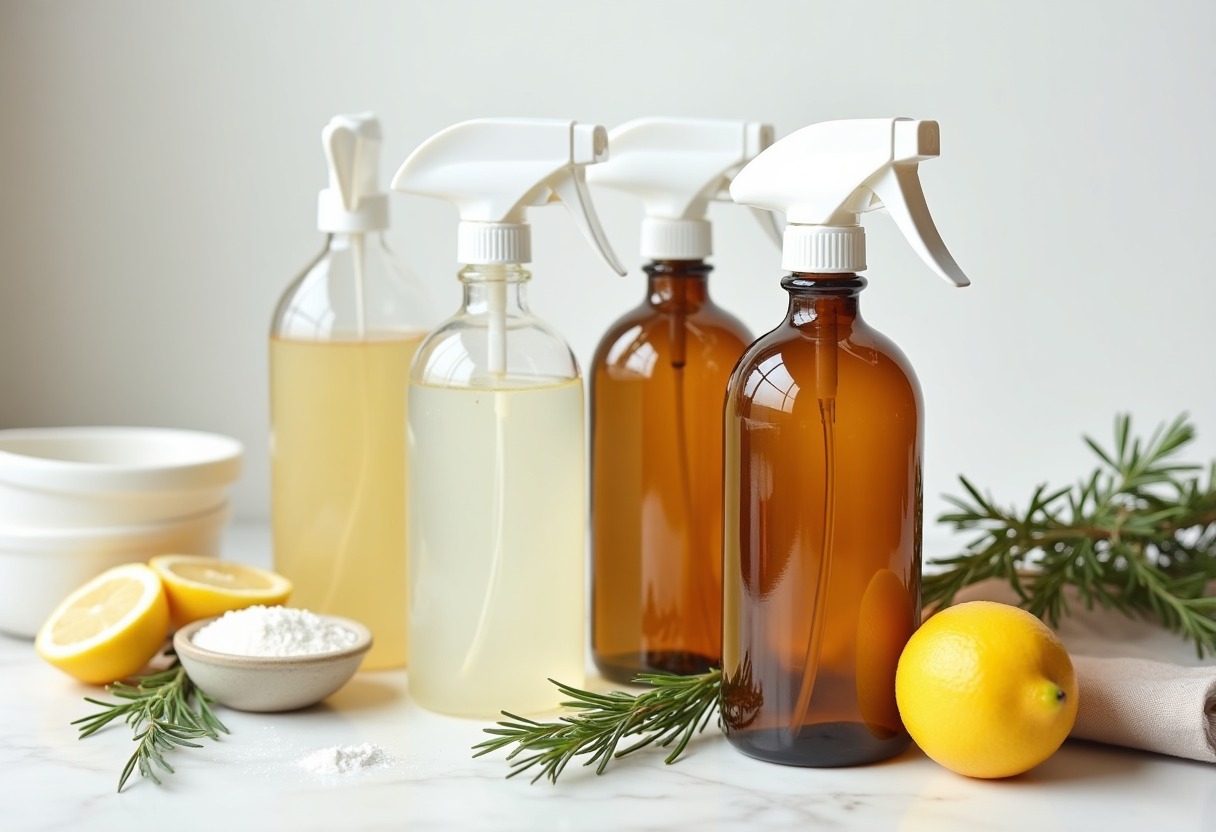
Most natural all-purpose cleaners fail because they're built on wishful thinking rather than chemistry. Lemon juice smells clean, but pH alone doesn't remove grease. Baking soda feels productive, but it's a mild abrasive that doesn't disinfect. The natural cleaners that actually work do so for specific, measurable reasons—and knowing which ingredient does what keeps you from mixing vinegar and castile soap into a useless, separated mess.
Why Natural Cleaners Work (When They Do)
Effective cleaning requires one or more of these actions: dissolving grease, breaking down mineral deposits, killing bacteria, or physically lifting dirt. Commercial cleaners accomplish this through surfactants, acids, bases, and antimicrobial agents—all of which exist in natural forms.
Vinegar works because acetic acid (typically 5% in household vinegar) dissolves mineral deposits and cuts through light grease. Castile soap contains saponified plant oils that act as surfactants, surrounding and lifting dirt particles. Hydrogen peroxide releases oxygen when it breaks down, which oxidizes bacteria and organic stains. Washing soda (sodium carbonate) is a strong alkali that saponifies fats and breaks down proteins.
The U.S. Environmental Protection Agency recognizes specific criteria for safer chemical ingredients, focusing on low toxicity, minimal environmental impact, and transparency in labeling. Natural cleaners meet these standards when formulated correctly, though "natural" itself isn't a regulated term for cleaning products.
What doesn't work: mixing acids and bases together. Vinegar and baking soda create a fizzy neutralization reaction that leaves you with water and sodium acetate—neither of which cleans. Keep your acids (vinegar, citric acid) separate from your bases (castile soap, washing soda).
Four Core Natural All-Purpose Cleaners
Vinegar Spray (Acid-Based)
Mix equal parts white vinegar and water in a glass spray bottle. Use distilled white vinegar (5% acetic acid), not apple cider or cleaning vinegar (which is 6-10% and can damage some surfaces). Add 10-15 drops of essential oil if you want to mask the vinegar smell—it dissipates as it dries, but tea tree or eucalyptus speeds the process.
Best for: Glass, windows, mirrors, countertops (except marble or granite), bathroom fixtures, floor tiles, refrigerator interiors.
Avoid on: Natural stone, hardwood floors, cast iron, certain appliance finishes.
Castile Soap Spray (Surfactant-Based)
Add 1-2 tablespoons liquid castile soap to 2 cups warm water. Start with less soap—too much leaves residue. Shake before each use since separation is normal.
Best for: Kitchen grease, stovetops, counters, walls, door handles, baseboards, general surface cleaning.
Avoid on: Glass (leaves streaks), and never mix with vinegar or lemon juice.
Hydrogen Peroxide Cleaner (Oxidizing Agent)
Use 3% hydrogen peroxide straight from the bottle in an opaque spray bottle (light degrades it). For tougher jobs, mix 1 cup hydrogen peroxide, 1 cup water, and 2 tablespoons baking soda. This creates a gentle scrub that won't store—mix fresh each time.
Best for: Cutting boards, bathroom mold, grout, fabric stains, toilet bowls, trash cans.
Avoid on: Colored fabrics (test first), certain countertop finishes.
Washing Soda Solution (Alkaline Degreaser)
Dissolve 2 tablespoons washing soda in 2 cups hot water. Wear gloves—washing soda is more caustic than baking soda. This is for heavy-duty jobs, not daily wiping.
Best for: Ovens, range hoods, garage floors, outdoor furniture, extremely greasy surfaces.
Avoid on: Aluminum, fiberglass, wood, and don't use with bare hands.
Natural Cleaner Comparison
| Cleaner Type | pH Level | Primary Action | Shelf Life | Best Use Case | |--------------|----------|----------------|------------|---------------| | Vinegar spray | 2.5-3 (acidic) | Dissolves minerals, cuts light grease | 6-12 months | Daily surface cleaning, glass, bathroom fixtures | | Castile soap spray | 8.9-9 (alkaline) | Surfactant lifts dirt and oil | 1-2 months (separation normal) | Kitchen grease, walls, general dirt | | Hydrogen peroxide | 7 (neutral) | Oxidizes bacteria and stains | 1-6 months (degrades with light) | Disinfecting, mold, cutting boards | | Washing soda solution | 11 (very alkaline) | Saponifies fats, breaks down proteins | Mix fresh (degrades quickly) | Heavy grease, ovens, outdoor surfaces |
What You Actually Need to Buy
Skip the pre-made "natural" cleaners until you've tried making your own. Most charge $8-12 for what amounts to diluted castile soap or vinegar in a spray bottle.
Glass spray bottles: → Shop amber glass spray bottles on Amazon. Get at least two 16-ounce bottles—one for vinegar, one for soap. Amber blocks UV light if you're storing hydrogen peroxide solutions. Metal or plastic triggers work equally well.
Castile soap: → Shop unscented liquid castile soap on Amazon. Dr. Bronner's is the standard. One 32-ounce bottle makes 64-96 ounces of cleaning spray depending on your dilution ratio. Unscented gives you flexibility to add your own essential oils or skip them entirely.
White vinegar: → Shop gallon white vinegar on Amazon. Buy by the gallon. Store brands work identically to name brands—all are 5% acetic acid.
Microfiber cloths: → Shop microfiber cleaning cloths on Amazon. Natural cleaners work better with microfiber than cotton rags. The split fibers trap particles mechanically, reducing how much chemical cleaning power you need. Get enough to rotate through laundry cycles.
Optional additions: A box of washing soda (laundry aisle), a bottle of 3% hydrogen peroxide (pharmacy section), and a set of cleaning-grade essential oils (tea tree, eucalyptus, lemon) if you want scent. The same principles that apply to Natural Dish Soap Alternatives apply here—simpler ingredient lists perform just as well.
What Most Natural Cleaning Posts Won't Tell You
Surface matters more than cleaner. Microfiber cloths physically remove 99% of bacteria even with just water, according to multiple studies on hospital cleaning protocols. Your cleaner choice matters most for grease, stains, and mineral deposits—not necessarily for "killing germs." Hot water and friction do most of the actual sanitizing work.
Vinegar doesn't disinfect quickly enough for medical-grade cleaning. It has antimicrobial properties, but the EPA doesn't recognize it as a disinfectant because kill times are too long (10+ minutes of wet contact time). For true disinfection, hydrogen peroxide or rubbing alcohol work faster. For routine home cleaning where you're not dealing with raw meat contamination or illness, vinegar's cleaning action is sufficient.
Mix fresh or add preservatives. Water-based cleaners with organic ingredients (like castile soap) can grow mold or bacteria. Vinegar acts as its own preservative. Straight hydrogen peroxide won't spoil but degrades. If you're mixing soap with water, use it within a month, or add 1 teaspoon vitamin E oil per cup of cleaner as a natural preservative. This is the same shelf-life consideration that comes up in Natural Food Storage Containers Guide—water + organic matter = potential bacterial growth.
Test on hidden spots first. Natural doesn't mean non-reactive. Vinegar etches marble, castile soap can cloud some finishes, and washing soda strips protective coatings. Every countertop material has different tolerances. Spot-test new cleaners in an inconspicuous area and wait 24 hours.
"Natural" essential oils are optional, not antimicrobial superstars. Marketing overstates their disinfecting power. Tea tree, thyme, and oregano oils show antimicrobial activity in laboratory settings, but effective concentrations (often 2-5%) make cleaners smell medicinal and can irritate skin. At the 10-20 drops per bottle most recipes call for, they're there for scent, not sterilization. If you enjoy them, use them. If you don't, skip them. The base cleaner works identically either way. For more on essential oil use (and overuse), check posts on Aroma Tranquility.
Frequently Asked Questions
Can I mix vinegar and hydrogen peroxide together in one bottle?
No. When mixed, they form peracetic acid, which is corrosive and potentially dangerous in uncontrolled concentrations. You can use them sequentially—spray vinegar, wipe, then spray hydrogen peroxide, wipe—but store and apply them separately. Each works independently for different cleaning actions anyway: vinegar for mineral deposits and light grease, peroxide for oxidizing stains and bacteria.
Does baking soda actually clean or is it just abrasive?
Baking soda is a mild abrasive and a weak base (pH around 8.3). It scrubs well and absorbs odors effectively, but it doesn't cut grease or disinfect. It neutralizes acids, which is why mixing it with vinegar cancels out both ingredients' cleaning properties. Use baking soda as a scouring powder for stuck-on food or sink scrubbing, but not as an all-purpose cleaner on its own.
How do I clean granite or marble countertops naturally?
Skip vinegar entirely—acids etch natural stone. Use castile soap diluted in water (1 tablespoon per 2 cups), spray, wipe with microfiber, then dry immediately to prevent water spots. For disinfecting, 70% isopropyl alcohol in a spray bottle works without damaging the stone. Hydrogen peroxide is generally safe on granite but test on marble first, as some marble varieties react to oxidizers.
Why does my homemade cleaner leave streaks on glass?
Usually from too much soap or hard water minerals. If using castile soap on glass, you'll get streaks—switch to vinegar spray for windows and mirrors. If using vinegar and still getting streaks, your water has high mineral content. Use distilled water instead of tap water in your spray bottle, or finish with a dry microfiber cloth buff after cleaning.
Can natural cleaners handle serious mold or mildew?
Hydrogen peroxide (3% or stronger) kills mold effectively if you spray it, let it sit for 10 minutes, then scrub and wipe. Vinegar also kills most mold species but requires longer contact time (up to an hour for heavy growth). For persistent bathroom mold, spray peroxide, wait, scrub with baking soda as an abrasive, then rinse. If you have black mold or extensive growth, that's a remediation job beyond what any household cleaner handles safely.
Natural all-purpose cleaners work when you match the chemistry to the job—not when you assume all "natural" ingredients clean equally.
Some links on this page are affiliate links. We may earn a small commission if you purchase through them, at no extra cost to you.
As an Amazon Associate we earn from qualifying purchases. This article contains affiliate links; if you buy through them we may earn a small commission at no additional cost to you.