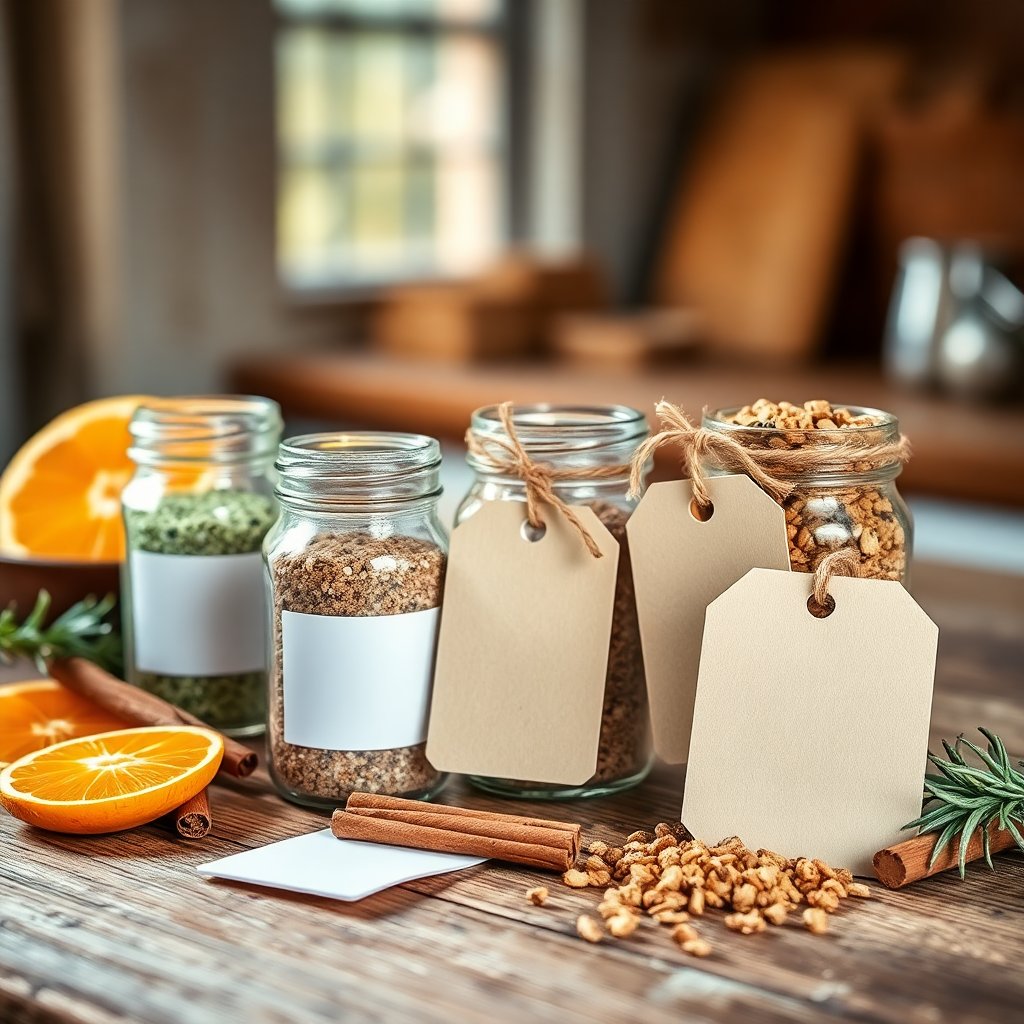
There is a particular kind of gift that never gets regifted: a small jar of something good that someone made by hand. A pantry gift costs very little, uses up what you already have, and gets eaten instead of stored in a closet. Better still, most of the best ones need a few weeks to dry, cure, or mellow, which is exactly why early November is the moment to start.
Below are seven real-ingredient pantry gifts that are simple, shelf-stable when made correctly, and genuinely useful in a kitchen. None of them call for anything you cannot pronounce. A few take ten minutes; a couple need a little patience. All of them look lovely in a plain glass jar with a handwritten label.
Why Start Pantry Gifts in Early November
Time does a lot of the work. Herb salts need to dry fully before they are jarred. Vanilla and citrus sugars improve as the aromatics settle into the crystals. Infused vinegars want a couple of weeks to steep. Starting now means everything is finished, labeled, and boxed by the first week of December, with no last-minute scramble.
Ingredients are at their best and cheapest. Late fall brings a final flush of garden herbs, the start of citrus season, and good prices on nuts, oats, and dried fruit ahead of holiday baking.
You can batch. One afternoon of measuring and mixing can produce gifts for a dozen people. Make a double batch of whatever turns out best and keep one for your own shelf.
1. Rosemary and Lemon Finishing Salt
Why it works: A flaky or coarse salt rubbed with fresh herbs and citrus zest turns plain roast vegetables, eggs, and buttered bread into something special. It is the easiest gift on this list and one of the most used.
How to make it:
- Combine 1 cup coarse sea salt with the finely grated zest of 2 lemons and 2 tablespoons of finely chopped fresh rosemary.
- Rub the mixture between your fingers for a minute to release the oils.
- Spread thinly on a parchment-lined tray and let it air-dry for 2 to 3 days, stirring once a day, or dry it in the oven at the lowest setting for about an hour.
- Once it feels completely dry and sandy, break up any clumps and jar it.
The key rule: The salt must be fully dry before it goes into a sealed jar. Moisture trapped with fresh herbs is what causes clumping and spoilage. Swap rosemary for thyme, sage, or a pinch of chili flakes to make a set of three.
→ Shop coarse flaky sea salt on Amazon
2. A Signature Spice Blend
Why it works: A custom blend gives someone a shortcut to dinner. A smoky taco blend, a warming chai mix, or a simple everything-seasoning blend will be reached for every week.
A warm baking blend to start with:
- 3 tablespoons ground cinnamon
- 1 tablespoon ground ginger
- 2 teaspoons ground nutmeg
- 1 teaspoon ground allspice
- 1 teaspoon ground cloves
Whisk well, jar it, and add a tag that suggests uses: oatmeal, apple crisp, pumpkin bread, or stirred into coffee grounds before brewing.
For the best flavor, toast and grind whole spices yourself. Whole spices hold their aroma far longer than pre-ground ones, and toasting them briefly in a dry pan before grinding makes a blend that tastes noticeably brighter. If you are building that habit, our guide to stocking a whole-spice pantry covers which whole spices to buy and how to store them.
3. Vanilla or Citrus Sugar
Why it works: Flavored sugar is a quiet luxury. Sprinkle it on shortbread, stir it into tea, or use it in place of plain sugar in a cake.
- Vanilla sugar: Bury one or two split vanilla beans in 2 cups of organic cane sugar. Seal and let it sit for at least two weeks, shaking now and then. The longer it sits, the stronger it gets.
- Citrus sugar: Rub the zest of 2 oranges or 3 clementines into 2 cups of sugar with your fingertips until it smells strongly of citrus. Spread it out to dry for a day before jarring so it does not clump.
If you already have a bottle of homemade vanilla going, spent beans from it are perfect for sugar. Our walk-through on making homemade vanilla extract pairs naturally with this one, and a small extract bottle alongside a jar of vanilla sugar makes a thoughtful baker's set.
4. Toasted Maple Nut Granola
Why it works: Homemade granola is cheaper and far less sweet than most store versions, and you control every ingredient.
A simple base:
- 4 cups old-fashioned rolled oats
- 1.5 cups raw nuts and seeds (pecans, almonds, pumpkin seeds)
- 1/2 cup maple syrup
- 1/3 cup olive oil or melted coconut oil
- 1 teaspoon cinnamon and 1/2 teaspoon salt
Toss everything together, spread on a sheet pan, and bake at 300°F for 35 to 45 minutes, stirring every 15 minutes, until golden. Let it cool completely on the pan before adding dried fruit, which keeps the fruit chewy rather than hard.
Shelf life note: Granola keeps roughly two to three weeks at room temperature in an airtight jar, because the nuts and oil eventually turn stale or rancid. Make this one closer to gift day, around the first week of December, or tuck it in the freezer until then.
5. Herb-Infused Vinegar
Why it works: A bottle of tarragon, thyme, or rosemary vinegar makes weeknight salad dressings taste homemade with no effort.
- Wash and fully dry a few sprigs of sturdy fresh herbs.
- Place them in a clean glass bottle and cover with warmed white wine vinegar or apple cider vinegar.
- Cap and let steep in a cool, dark place for 2 to 4 weeks, then strain and rebottle with a fresh sprig for looks.
Vinegar's acidity makes this one of the safer homemade infusions, but use clean equipment and keep the finished bottle in a cool spot. The National Center for Home Food Preservation has clear, research-based guidance on flavored vinegars, including recommended steeping and storage practices, and is worth a quick read before you scale up. If you have already made a batch of fire cider, you know the method: this is its gentler, more versatile cousin.
→ Shop swing-top glass bottles on Amazon
6. Dried Citrus and Spice Mulling Kit
Why it works: A bag of dried orange rounds, cinnamon sticks, whole cloves, and star anise turns a bottle of cider or wine into a warm holiday drink. It smells wonderful, and it doubles as decoration.
- Slice oranges about 1/4 inch thick and dry them in a dehydrator at around 135°F for 8 to 12 hours, or in a low oven (about 200°F) for 3 to 4 hours, flipping occasionally, until completely dry and slightly translucent.
- Combine 6 to 8 orange rounds with 3 cinnamon sticks, 1 tablespoon whole cloves, 3 star anise pods, and a few allspice berries.
- Pack into a cellophane bag or small jar with a tag: "Simmer gently with 1 quart cider for 20 minutes."
The dried oranges keep for months if they are bone-dry before packing. Any slice that still feels tacky needs more time.
7. Garlic and Herb Seasoning (Dried, Not in Oil)
Why it works: A dried garlic-herb blend is endlessly useful for roast potatoes, popcorn, and bread dipping.
Combine dried minced garlic, dried parsley, dried oregano, cracked black pepper, and a little coarse salt in roughly equal parts, adjusting to taste.
A crucial safety note: Skip gifting homemade garlic-in-oil or fresh herbs-in-oil. Low-acid fresh ingredients submerged in oil at room temperature can create conditions where Clostridium botulinum grows, and you cannot see, smell, or taste the danger. The U.S. Food and Drug Administration and food-safety extension services consistently advise refrigerating these and using them quickly, which makes them a poor fit for gifting. A dry blend gives the same flavor with none of the risk. Pack a small bottle of good olive oil alongside it if you want the bread-dipping experience.
Jars, Labels, and Packaging
Presentation is half the charm, and it does not need to be fussy.
Use glass. Small 4 to 8 ounce mason jars or hinged-lid jars look clean, seal well, and get reused. Avoid plastic for anything with oils or strong aromatics, which can pick up odors.
Label everything clearly. Include the name, the date made, a "best by" date, and two or three ideas for using it. A recipient who knows how to use a gift actually uses it.
Note allergens. If a gift contains nuts, gluten, or sesame, say so on the tag. It is a small courtesy that matters.
Wrap simply. Kraft paper tags, cotton twine, and a sprig of dried rosemary look better than most store packaging and cost almost nothing.
→ Shop small glass gift jars with lids on Amazon
→ Shop kraft paper gift tags and twine on Amazon
A Simple Timeline
This week (early November): Start herb vinegars and vanilla sugar. Dry orange slices for the mulling kits.
Mid-November: Make finishing salts and spice blends. Order jars, tags, and bottles if needed.
Late November: Strain and rebottle vinegars. Assemble mulling kits.
First week of December: Bake granola. Label, wrap, and box everything.
Spreading the work out this way keeps it enjoyable instead of becoming one more holiday chore.
How Much These Gifts Cost
Most of these come in at a few dollars per jar, and often less if you grow herbs or buy spices in bulk. The biggest single expense is usually the glass itself, which is why buying jars in a multi-pack is worth it. Even a generous gift set of three small jars, say a finishing salt, a spice blend, and a citrus sugar, typically costs less than a single store-bought gourmet item, and it carries far more meaning.
Food-Safety Ground Rules
Homemade gifts should be safe as well as pretty. A few principles cover nearly everything on this list:
- Dry means dry. Salts, sugars, and dried fruit must be fully moisture-free before sealing.
- Acid is your friend. Vinegar-based infusions are far safer than oil-based ones.
- Avoid fresh low-acid ingredients in oil for any gift that will sit at room temperature.
- Work clean. Wash jars in hot, soapy water and dry them completely before filling.
- Be honest about shelf life on the label, especially for anything containing nuts or oils.
When in doubt, choose the dry version of an idea. It will keep longer and travel better.
The Bottom Line
The best pantry gifts are small, useful, and made from ingredients anyone can name. A jar of herb salt, a bag of mulling spices, or a bottle of tarragon vinegar says more than another candle ever could, and it gets used down to the last pinch. Start the slow ones this week, batch the quick ones in mid-November, and you will have a shelf of real-ingredient gifts ready well before the holiday rush.
Affiliate disclosure: some links above are Amazon affiliate links, and purchases made through them may earn this site a small commission at no extra cost to you. That support helps keep these guides free.
As an Amazon Associate we earn from qualifying purchases. This article contains affiliate links; if you buy through them we may earn a small commission at no additional cost to you.