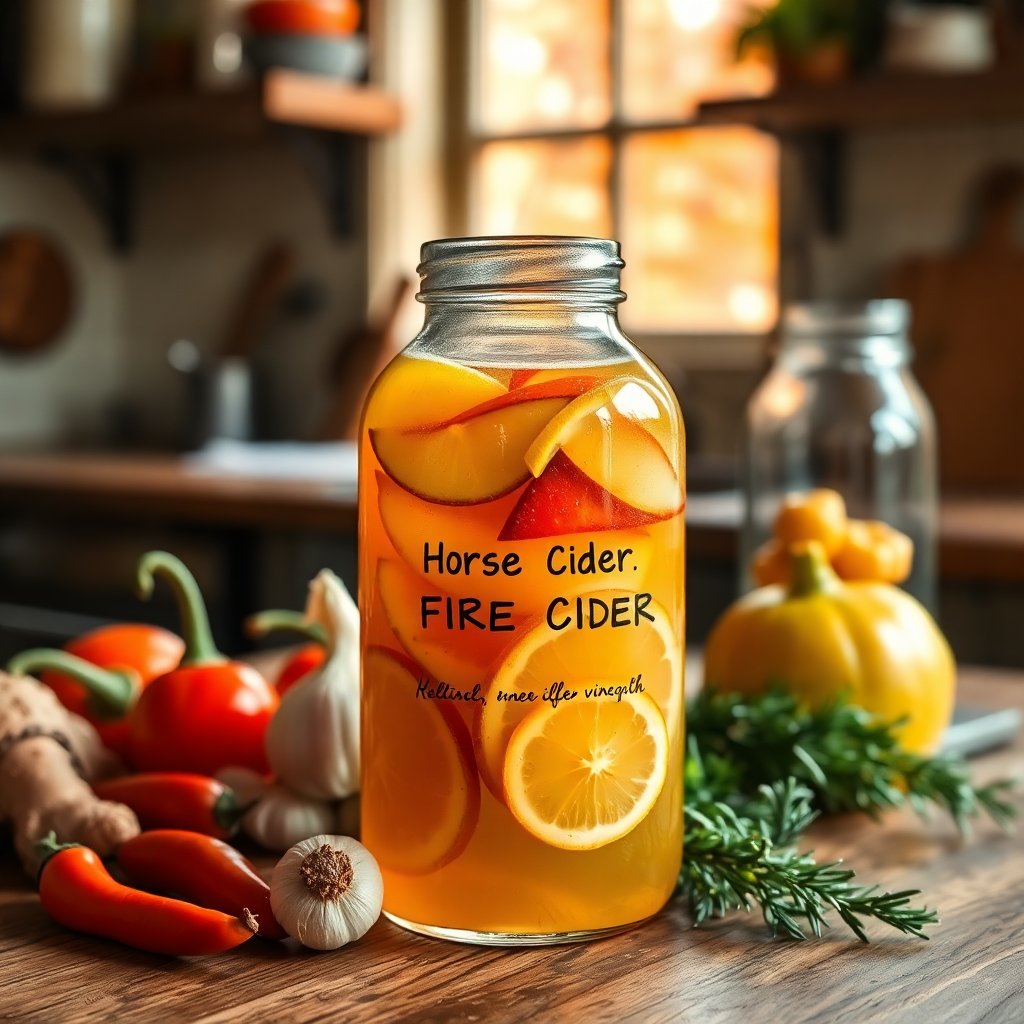
Every fall, a certain kind of jar starts showing up on kitchen counters: cloudy amber vinegar packed with chunks of garlic, ginger, onion, and chili, steeping quietly for a month. Fire cider is one of the oldest and simplest from-scratch pantry projects there is. You chop a handful of pungent, real ingredients, cover them with apple cider vinegar, and let time do the work. The result is a sharp, hot, sweet-sour tonic that people take by the spoonful in cold weather and splash into everything from salad dressings to soups.
The timing matters. Fire cider wants roughly four weeks to steep, so a batch started in late October is ready right around Thanksgiving, just as the cold, dry, cough-and-sniffle season hits full stride. Here is how to make it, what each ingredient brings, and how to use the finished jar so it does not just sit in the back of the fridge.
What Fire Cider Actually Is
Fire cider is a vinegar infusion, sometimes called an oxymel once honey is added. It sits in the same family as herbal vinegars and shrubs that home cooks have made for centuries. The modern version was popularized by American herbalist Rosemary Gladstar in the late 1970s, and it has since become a folk recipe that thousands of home kitchens adapt freely. There is no single correct formula. The core is always the same: pungent roots, alliums, heat, and vinegar.
Because it is acidic and full of strongly flavored ingredients, a well-made batch keeps for months in the fridge. That makes it a natural fit for a real-ingredient pantry.
The Ingredients and Why They Are There
This makes about one quart.
The base
- About 3 cups raw, unfiltered apple cider vinegar (with "the mother," if you can find it)
- 1/4 to 1/2 cup raw honey, added after straining
The fire
- 1/2 cup freshly grated horseradish root — the sinus-clearing kick
- 1/2 cup grated or chopped fresh ginger — warming and spicy-sweet
- 1 medium onion, chopped
- 1 whole head of garlic, cloves peeled and crushed or chopped
- 1 to 2 hot peppers, sliced (jalapeño, serrano, or habanero if you are brave)
Optional additions
- 1 organic orange or lemon, sliced, peel and all
- 2 tablespoons fresh or 1 tablespoon dried turmeric
- A few sprigs of fresh rosemary or thyme
- 1/2 teaspoon whole black peppercorns (helps with turmeric, adds bite)
- A cinnamon stick
If you made your own vinegar from apple scraps using our raw apple cider vinegar guide, this is a perfect use for it. Store-bought raw ACV works just as well.
→ Shop raw unfiltered apple cider vinegar with the mother on Amazon
Tools You Need
You almost certainly own most of this already:
- A clean quart-size glass jar with a lid
- A grater or food processor for the horseradish and ginger
- A cutting board and sharp knife
- Parchment paper or a plastic lid, because vinegar corrodes metal lids
- A fine mesh strainer or cheesecloth for straining
The metal lid issue catches a lot of people. Vinegar will react with a bare metal canning lid over four weeks, leaving rust and an off taste. Either lay a square of parchment between the jar and the lid or use plastic storage caps made for mason jars.
→ Shop plastic wide-mouth mason jar lids on Amazon
Step-by-Step: Making Your Batch
1. Prep the produce
Wash everything well. Peel the horseradish (it has a tough skin) and grate it. Grate horseradish in a well-ventilated spot, or in a food processor with your face turned away when you open the lid. Freshly grated horseradish releases volatile compounds that can make your eyes stream in seconds. Ginger can be grated with the skin on if it is organic.
Chop the onion, crush or chop the garlic, slice the peppers, and slice the citrus. Wear gloves for hot peppers, and do not touch your eyes.
2. Pack the jar
Layer everything loosely into the jar. You want it about two-thirds to three-quarters full of solids.
3. Cover with vinegar
Pour apple cider vinegar over the top until all the ingredients are fully submerged with an inch or so of vinegar above them. Anything poking above the liquid can grow mold. A small glass fermentation weight helps keep floaters down.
4. Seal and steep
Cover with parchment and a lid, label it with the date, and keep it somewhere cool and dark like a pantry shelf. Give the jar a shake every day or two for the first couple of weeks.
5. Wait about four weeks
Most recipes call for three to six weeks. Four is a good sweet spot. Taste it at three weeks if you are curious; the longer it steeps, the hotter and more complex it gets.
6. Strain and sweeten
Strain the liquid through a fine mesh strainer or cheesecloth, pressing or squeezing the solids to get every drop. Stir in raw honey to taste, starting with 1/4 cup. Some people skip the honey entirely; others go heavier for a sweeter tonic.
7. Bottle and store
Pour into a clean bottle or jar and refrigerate. Stored cold, fire cider keeps well for several months. If you see fuzzy mold or notice an off smell, toss it.
→ Shop swing-top glass bottles on Amazon
Do Not Waste the Leftover Solids
The strained pulp is still loaded with flavor. A few ways to use it:
- Blend it into a hot relish for sandwiches, grain bowls, or eggs
- Stir a spoonful into stir-fries or soups
- Dehydrate it and grind it into a spicy seasoning blend
- Mix it into a marinade for tofu, beans, or roasted vegetables
If you keep a whole-spice pantry (our whole spice pantry guide covers the basics), a jar of dried fire cider sprinkle makes an excellent addition.
How People Use Fire Cider
By the spoonful. The traditional use is a tablespoon or so a day during cold months, or a shot when you feel run down. Many people chase it with water because it is genuinely fiery.
In the kitchen. This is where fire cider really earns its place:
- Salad dressing: whisk 2 tablespoons fire cider with 4 tablespoons olive oil, a pinch of salt, and a little mustard
- Soup finisher: a splash brightens lentil soup, black bean soup, or vegetable stock-based broths
- Hot tea: a tablespoon in hot water with extra honey and lemon
- Shrub-style drink: mix with sparkling water over ice
- Marinade base: combine with oil, tamari, and herbs
An Honest Note on the Health Claims
Fire cider is often described online as an immune booster or cold remedy. The individual ingredients do have a long history in traditional food and folk medicine, and some have been studied. The National Center for Complementary and Integrative Health notes that research on garlic for preventing or treating colds is limited and not conclusive, and the evidence for many popular folk remedies is similarly thin.
The fair way to think about fire cider: it is a flavorful, real-food condiment made of ingredients people have valued for generations. It is not a medicine, and it will not cure or prevent illness on its own. Enjoy it for what it is.
A few cautions:
- The acidity is hard on tooth enamel. Dilute it in water and rinse your mouth afterward.
- It can aggravate heartburn or acid reflux. Start small.
- Garlic in larger amounts may interact with blood thinners, and raw honey should never be given to babies under one year old.
- If you are pregnant, nursing, on medication, or managing a health condition, check with your doctor before taking it regularly.
This is not medical advice — talk to your doctor before using any food as a remedy.
Make It a Holiday Gift
A small bottle of homemade fire cider with a handwritten label makes a thoughtful, low-cost gift for the person who loves hot sauce or from-scratch cooking. Start a double batch now, and you will have bottles ready by the first week of December. If you enjoyed our fall hot sauce fermentation project, fire cider is its spicy pantry cousin: simpler, faster to start, and endlessly adjustable.
The Bottom Line
Fire cider takes about twenty minutes of chopping and a month of patience. What you get is a jar of something sharp, hot, and genuinely useful: a dressing base, a soup brightener, a warming spoonful on a cold morning, all made from real ingredients you can name. Start it this week and it will be ready just as the cold settles in.
Affiliate disclosure: some links above are Amazon affiliate links, and purchases made through them may earn this site a small commission at no extra cost to you. That support helps keep these guides free.
As an Amazon Associate we earn from qualifying purchases. This article contains affiliate links; if you buy through them we may earn a small commission at no additional cost to you.