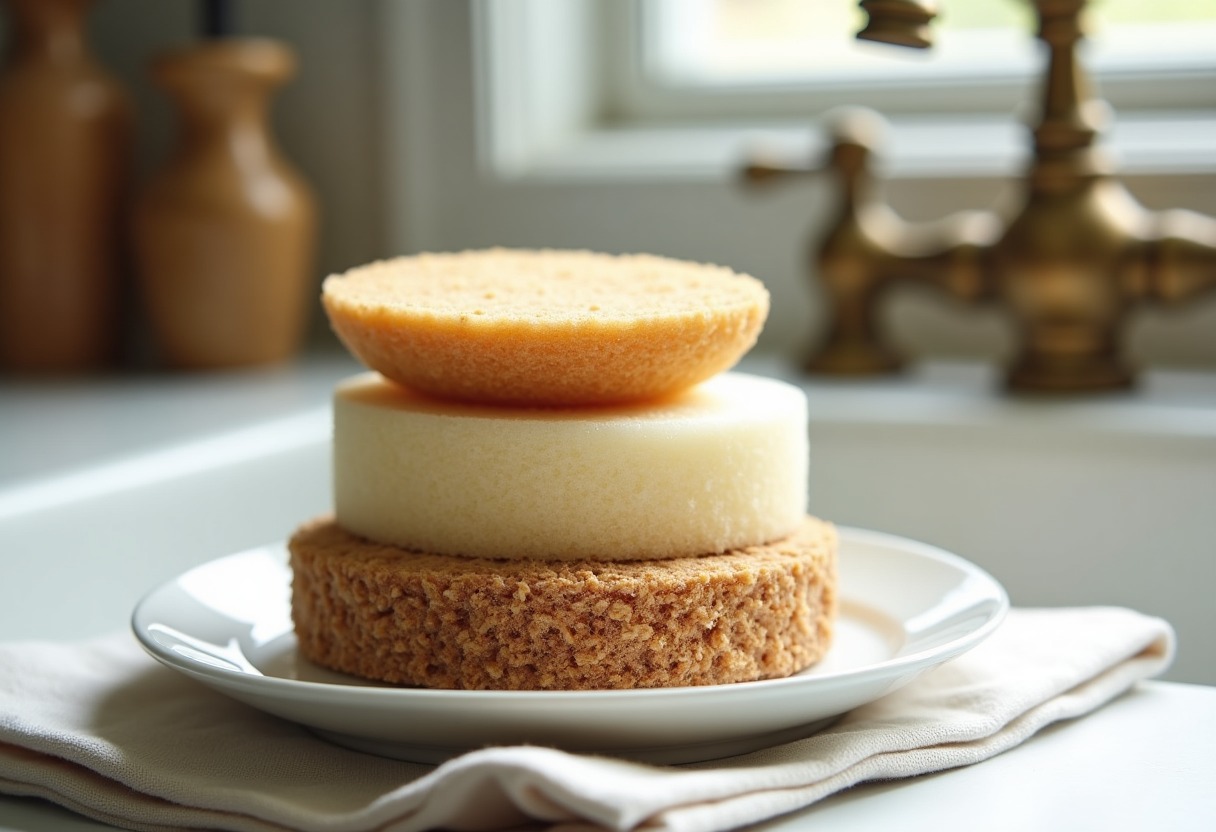
Your kitchen sponge harbors more bacteria per square inch than your toilet seat—and when it breaks down, it sheds microplastics into your water supply. The bright yellow cellulose sponges most of us grew up with are petroleum-based foam wrapped in polyester netting, designed to degrade into particles too small to filter out but large enough to accumulate in marine life and drinking water.
Natural kitchen sponges work just as well without the environmental baggage. I switched my kitchen over three years ago, and the biodegradable options I use now actually outperform synthetic versions for most tasks—plus they compost cleanly when worn out.
Why Natural Sponges Actually Clean Better
Natural fiber sponges rely on plant cellulose structure instead of synthetic foam to create absorbency. Loofah gourds, coconut coir, agave fibers, and wood pulp cellulose all have naturally occurring channels that pull water and soap through the material. This creates scrubbing action without the need for abrasive plastic netting.
The bacterial growth problem that plagues synthetic sponges comes partly from their material composition. Petroleum-based foam retains moisture in ways that encourage microbial colonies. Natural fibers dry faster between uses—coconut coir and loofah particularly so—which limits bacterial multiplication. A 2017 study in Scientific Reports found that kitchen sponges can contain up to 54 billion bacteria per cubic centimeter, with synthetic materials providing ideal growing conditions.
Natural options also skip the chemical treatments. Most conventional sponges are treated with triclosan or other antimicrobial agents that sound reassuring but actually contribute to antibiotic resistance. The FDA banned triclosan in consumer hand soaps in 2016 for this reason, but it persists in sponge manufacturing.
Types of Natural Sponges and What They Clean Best
Loofah sponges come from the fibrous interior of mature loofah gourds. They're stiff when dry, pliable when wet, and excellent for scrubbing stuck-on food without scratching. I use them for cast iron pans, baking sheets, and countertop cleanup. They last two to three months with daily use and can be sanitized in boiling water. → Shop natural loofah sponges on Amazon
Coconut coir scrubbers are made from the husk fibers of coconuts. They're more abrasive than loofah—almost pot-scrubber level—but safe for most cookware. These excel at burnt-on residue and heavily soiled pots. The fiber structure doesn't trap food particles the way synthetic sponges do, which means they rinse cleaner and smell better over time. → Shop coconut fiber dish scrubbers on Amazon
Biodegradable cellulose sponges look and feel similar to conventional sponges but are made from wood pulp and cotton instead of polyester. They're the closest match to what you're probably using now—soft, absorbent, good for general dish washing and wiping. The trade-off is durability: they break down faster than synthetic versions, usually lasting three to four weeks. → Shop biodegradable cellulose sponges on Amazon
Agave fiber brushes aren't sponges exactly, but they fill the same niche. Made from sisal plant fibers, these handheld brushes work well for bottles, jars, and detail cleaning. The bristles maintain stiffness even when wet, which gives better scrubbing control than a limp sponge. They pair naturally with Natural Dish Soap Alternatives for a fully synthetic-free sink setup.
Walnut shell scrubbers embed finely ground walnut shells in a cellulose or loofah base. The shells provide gentle abrasion for delicate surfaces—great for non-stick pans, glassware, and anything that scratches easily. These are specialty items, but they solve the problem of cleaning fragile cookware without resorting to microfiber cloths. → Shop walnut scrubber sponge on Amazon
Natural Sponge Performance Comparison
| Sponge Type | Best For | Lifespan | Abrasion Level | Compostable | |-------------|----------|----------|----------------|-------------| | Loofah gourd | Cast iron, baking sheets, counters | 2-3 months | Medium | Yes (whole) | | Coconut coir | Heavy scrubbing, burnt pots | 3-4 months | High | Yes (whole) | | Cellulose (wood pulp) | General dishes, wiping | 3-4 weeks | Low | Yes (whole) | | Agave fiber brush | Bottles, jars, detail work | 6-8 months | Medium-high | Yes (bristles only) | | Walnut shell blend | Non-stick, glassware | 4-6 weeks | Low-medium | Yes (if cellulose base) |
Recommended Natural Sponge Alternatives
For daily dish washing, start with a two-sponge system: a soft cellulose sponge for general cleaning and a loofah for anything that needs scrubbing. This covers 95% of kitchen tasks without plastic.
→ Shop agave fiber kitchen brush on Amazon
Cellulose sponges for routine cleaning: Look for "plant-based" or "compostable" on the label, and check that both the sponge and the scrubbing layer are natural. Some brands use plant cellulose for the sponge body but add a polyester scrubber—skip those. If you're replacing multiple synthetic sponges around the house, buy these in bulk packs of six to eight. They're affordable enough to swap out frequently, which matters more than longevity for bacterial control.
Loofah sponges for everyday scrubbing: Buy whole loofah gourds and cut them into sections yourself, or purchase pre-cut rounds. Whole gourds are cheaper per use and let you control thickness. Soak a new loofah in warm water for ten minutes before first use to soften the fibers. After heavy use, boil it for five minutes to sanitize—it holds up fine.
Coconut coir for tough jobs: These come in small pads or handheld scrubbers. The pad style stores flat and works well for baking sheet edges and stove grates. Coir is stiff enough to hurt your hands during prolonged scrubbing, so save it for jobs that actually need that level of abrasion. It pairs well with the scrubbing needs you might currently handle with steel wool.
Agave brushes for bottles and jars: A long-handled bottle brush with natural bristles handles what sponges can't reach. This becomes essential if you make How To Make Nut Milk regularly or store bulk foods in glass jars. The bristles last months longer than sponge material and rinse completely clean.
Specialty walnut scrubbers for non-stick: If you cook with non-stick pans regularly, walnut shell sponges protect the coating better than any other natural option. They're gentler than loofah but more effective than plain cellulose. This is a smaller category—fewer brands make them—but worth tracking down if you're trying to extend the life of expensive cookware.
How to Extend Natural Sponge Lifespan
Natural sponges need air circulation to stay fresh. Don't leave them sitting in the sink basin or in a puddle on the counter. I keep mine in a small wire basket that drains completely—the kind sold for shower caddies works perfectly.
Wring sponges thoroughly after each use. Natural fibers hold more water than synthetic foam, and that moisture invites bacterial growth if the sponge stays compressed. A good twist and squeeze removes 80% of residual water.
Sanitize weekly by boiling or microwaving. For loofah and coconut coir, drop them in boiling water for five minutes. For cellulose sponges, microwave wet for two minutes on high—the steam kills bacteria without degrading the material. Skip this with walnut scrubbers; the heat can damage the shell particles.
Rotate between two sponges. This gives each one extra drying time between uses, which dramatically reduces bacterial colonization. It also means you're never stuck doing dishes with a funky-smelling sponge while the other one sanitizes.
Compost worn-out sponges properly. Loofah, coconut coir, and pure cellulose go directly into compost bins. Agave brushes require separating the bristles from any metal ferrules. Walnut scrubbers need verification that the base material is plant-derived before composting. When you're upgrading your whole kitchen setup—like pairing these sponges with Non Toxic Cookware Guide recommendations—the compostability becomes a meaningful benefit rather than a feel-good feature.
FAQ
Do natural sponges smell bad faster than synthetic ones? Natural sponges smell different but not necessarily worse—they develop a plant fiber odor rather than the sour milk smell of synthetic foam. Proper drying between uses prevents most odor issues. If a loofah or coconut sponge does start to smell, boiling it for five minutes restores freshness completely.
Can I sanitize natural sponges in the dishwasher? Loofah and coconut coir handle dishwasher heat without problems—place them on the top rack. Cellulose sponges deteriorate faster in the dishwasher; stick to microwave or boiling water sanitizing for those. Agave brushes with wooden handles should not go in the dishwasher, as the heat warps the wood.
Are natural sponges safe for non-stick pans? Walnut shell scrubbers and plain cellulose sponges are safe for non-stick. Loofah and coconut coir are too abrasive for most non-stick coatings and will shorten pan lifespan. If you're unsure, test on an inconspicuous spot first—the bottom edge of a pan rather than the cooking surface.
How do natural sponges compare in cost to regular sponges? Natural options cost $1 to $3 per sponge versus $0.50 to $1 for synthetic. They last longer, though—a loofah at $2 that lasts three months costs less per week than synthetic sponges replaced monthly. The bigger cost difference shows up in multi-packs, where natural versions don't offer the same bulk discounts.
Can I grow my own loofah sponges? Yes, if you have garden space and a 100- to 120-day growing season. Loofah gourds grow on vines similar to cucumbers and need full sun, consistent water, and support trellising. Harvest when the gourds turn brown and feel light, then dry completely before peeling away the outer skin to reveal the sponge interior.
Making the Switch Stick
Start with one natural sponge type that matches your current cleaning habits, and replace synthetic versions as they wear out rather than tossing everything at once. Most people find cellulose plus loofah covers their needs completely within the first month.
Some links on this page are affiliate links. We may earn a small commission if you purchase through them, at no extra cost to you.
As an Amazon Associate we earn from qualifying purchases. This article contains affiliate links; if you buy through them we may earn a small commission at no additional cost to you.