Most people spend hundreds building a whole-foods pantry and never think twice about the surface they cook it on. Your pans leach more into your food than you'd guess, especially at high heat with acidic ingredients.
The cookware market's flooded with greenwashed claims—"eco-friendly," "natural nonstick," "healthy ceramic"—that mean nothing specific. You need clear answers on which materials actually hold up, which coatings break down into your dinner, and what's worth the money when you're cooking real food daily.
Why Traditional Nonstick Cookware Is a Problem
PFOA (perfluorooctanoic acid) and related PFAS chemicals were used in nonstick coatings for decades. PFOA specifically was phased out of manufacturing by 2015, but the replacement chemicals—GenX, PFBS, and dozens of others in the PFAS family—haven't been proven safer. These "forever chemicals" persist in the environment and in human tissue, with links to thyroid disruption, immune system effects, and developmental concerns.
Traditional Teflon and similar nonstick surfaces start breaking down around 500°F. That happens faster than you think—an empty pan on medium-high reaches that temperature in under five minutes. When the coating degrades, particles transfer directly into food. Even intact nonstick coatings release polymer fumes at high heat, which is why manufacturers warn against preheating empty pans.
Scratched nonstick accelerates the problem. One study found that a single scratch on a nonstick pan can release thousands of microplastic particles during normal cooking. If you're already avoiding plastic food storage containers and switching to natural food wraps, coating your vegetables in plastic particles from a degraded pan defeats the purpose.
Safe Cookware Materials That Actually Work
Stainless steel is the workhorse material for whole foods cooking. It's nonreactive, meaning it won't leach metals into acidic foods like tomato sauce or lemon-braised greens. An 18/10 designation (18% chromium, 10% nickel) offers the best corrosion resistance and durability. The learning curve is real—food sticks until you master preheating and fat management—but once you dial it in, stainless handles everything from searing proteins to deglazing with vinegar.
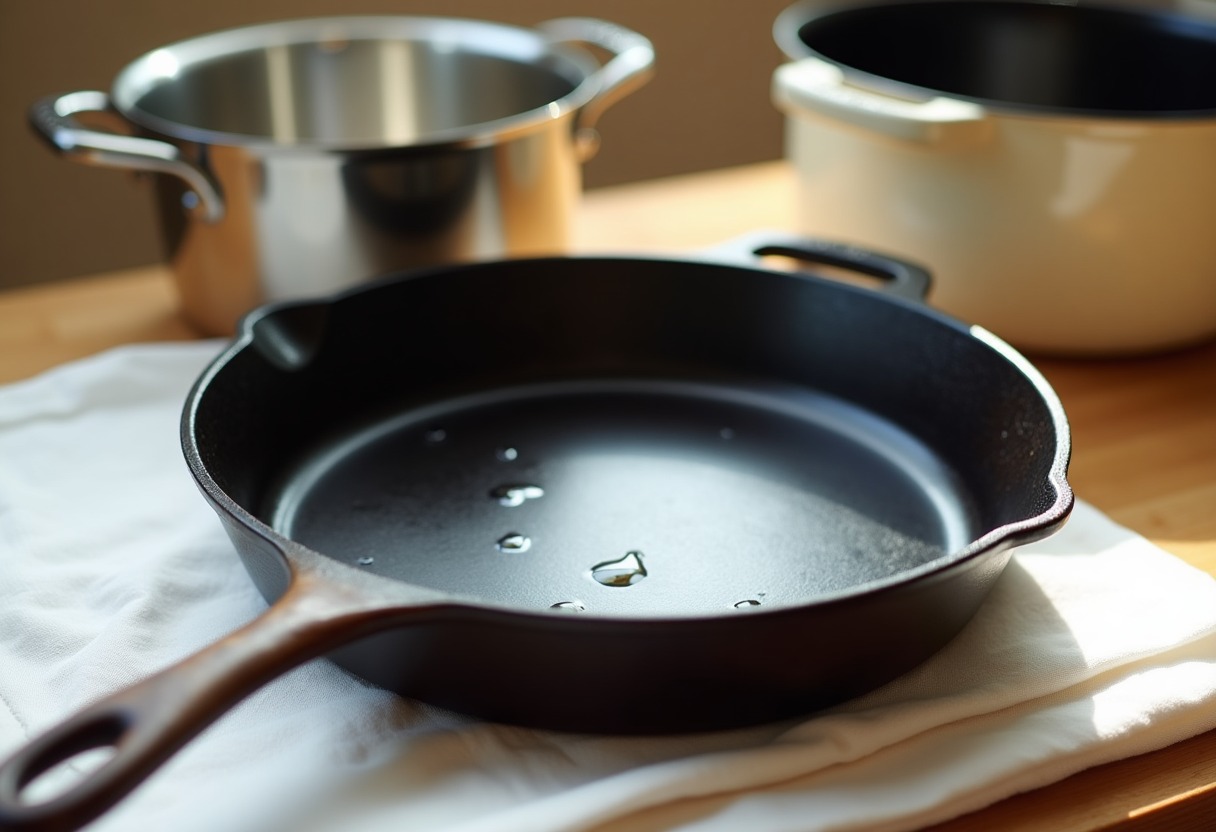
Cast iron has been around for centuries because it works. Pre-seasoned cast iron builds a natural nonstick surface through polymerized oil layers. It adds trace amounts of dietary iron to food, which can benefit people with low iron stores but may be a concern for those with hemochromatosis. Cast iron excels at high-heat cooking and oven-to-stovetop transitions. The weight and maintenance scare some people off, but a pre-seasoned cast iron skillet starts working immediately.
Carbon steel offers cast iron's heat retention in a lighter package. It seasons the same way and develops a naturally nonstick patina over time. Carbon steel heats faster than cast iron and responds more quickly to temperature changes, which makes it ideal for stir-fries and delicate vegetables. A carbon steel wok becomes indispensable once you've used one properly seasoned.
Ceramic cookware means two different things. True ceramic (100% clay-based) is safe but rare and fragile. Most "ceramic nonstick" pans have a sol-gel ceramic coating applied to a metal base. These coatings contain no PFAS, but durability varies wildly by brand. Quality ceramic nonstick works beautifully for six months to two years before the coating degrades, at which point the pan becomes a sticky mess. Budget ceramic pans fail faster.
Enameled cast iron combines cast iron's heat retention with a glass-based enamel coating that's completely nonreactive. This makes it perfect for acidic cooking—tomato sauces, wine braising, fermented vegetables. An enameled dutch oven handles everything from soups to no-knead bread. The enamel eliminates seasoning maintenance but adds fragility; chips expose raw iron underneath.
Material Comparison: What Works Where
| Material | Best For | Heat Limit | Maintenance | Lifespan | |----------|----------|------------|-------------|----------| | Stainless Steel | Searing, deglazing, acidic foods | 500°F+ (oven-safe) | Low—dishwasher safe | 20+ years | | Cast Iron | High-heat searing, baking, even heating | 500°F+ | Medium—requires seasoning | Lifetime with care | | Carbon Steel | Stir-frying, quick-cooking vegetables | 500°F+ | Medium—requires seasoning | Lifetime with care | | Ceramic Nonstick | Eggs, delicate fish, low-fat cooking | 350-400°F max | Low—hand wash only | 6 months-2 years |
The table shows why stainless steel cookware sets form the backbone of most serious kitchens. You can't break them, and they handle the widest range of techniques. Cast iron and carbon steel fill specific high-heat roles that stainless doesn't love.
What to Buy for a Whole Foods Kitchen
Start with three pieces: a 10-inch stainless steel skillet, a 3-quart stainless saucepan, and a 10-inch cast iron skillet. This trio handles 90% of whole foods cooking.
For the stainless skillet: look for tri-ply or five-ply construction (alternating layers of stainless and aluminum or copper). The aluminum core distributes heat evenly; single-layer stainless has hot spots that burn food. A riveted handle outlasts welded. Brands like All-Clad, Cuisinart, and Tramontina offer solid options at different price points.
For the cast iron: Lodge dominates the pre-seasoned market for good reason. Their factory seasoning is thin and requires building up, but it's functional out of the box. Older vintage cast iron (Griswold, Wagner) has smoother surfaces from different manufacturing, but you'll pay collector prices. A modern pre-seasoned cast iron skillet works fine once you add a few seasoning layers.
For eggs and delicate proteins: if you absolutely need nonstick, choose ceramic nonstick over PFAS-coated options. GreenPan and Caraway make decent ceramic pans. Understand that ceramic nonstick is essentially disposable—plan to replace it every year or two. Hand wash only; dishwashers destroy the coating faster.
Optional but useful: a carbon steel wok if you cook a lot of vegetables and grains. An enameled dutch oven for soups, stews, and anything acidic that simmers for hours. A stainless stockpot for making bone broth, cooking large batches of beans, or preparing dehydrator recipes that require blanching first.
Skip: copper cookware unless you're willing to polish it constantly. Aluminum cookware that's not anodized or clad—bare aluminum reacts with acidic foods. Any nonstick pan claiming to be "green" without specifying PFOA-free and PFAS-free.
Cast Iron Seasoning Tips That Actually Matter
Most cast iron advice overcomplicates seasoning. The basic chemistry: heat polymerizes oil into a hard, slick surface. More thin layers beat fewer thick layers.
Initial seasoning for new or stripped pans: wash with soap (yes, soap is fine), dry completely, heat in a 200°F oven for 10 minutes to drive off moisture. Cool slightly. Rub a thin layer of high-smoke-point oil (grapeseed, avocado, or refined coconut—skip olive oil) over every surface. Wipe off as much as possible with a paper towel; you want an invisible layer. Put the pan upside-down in a 450-500°F oven with foil on the rack below to catch drips. Bake for an hour. Let cool in the oven. Repeat 3-5 times.
Daily maintenance: after cooking, scrub with hot water and a stiff brush while the pan's still warm. Stubborn stuck food comes off with coarse salt as an abrasive. Dry immediately on the stove over low heat. Rub in a tiny amount of oil while warm. That's it.
When to strip and re-season: if food sticks consistently despite proper preheating and fat use, if rust develops in multiple spots, or if someone puts your pan in the dishwasher. Strip with oven cleaner or electrolysis, then reseason from scratch.
What not to worry about: using soap (modern dish soap won't strip polymerized seasoning), cooking acidic foods occasionally (a well-seasoned pan handles tomatoes fine), or small rust spots (scrub off and re-oil that area). Cast iron is nearly indestructible.
If your whole foods cooking includes a lot of sprouted lentils and fermented vegetables, you'll appreciate how cast iron handles cooking those ingredients without metallic off-flavors that thinner pans sometimes impart.
What Most Cookware Guides Miss
The handle matters more than you think. A metal handle that stays cool on the stovetop but goes oven-safe beats silicone or plastic wrapped handles that limit your oven to 350°F. Riveted handles outlast welded by years. Long handles balance better than short ones when you're swirling hot oil or tossing vegetables.
Pan size affects how you cook. A 10-inch skillet works for two people; a 12-inch handles four servings but takes longer to preheat and demands more fat to coat the surface. Deeper sides (2.5-3 inches) give you room to stir and toss; shallow sides make flipping easier but ingredients escape.
Weight indicates quality in stainless and cast iron. Heavier pans resist warping and distribute heat more evenly. If you can dent a stainless pan by pressing with your thumb, it's too thin. The exception is carbon steel, where lighter gauge actually performs better because it heats faster.
Lids that fit multiple pans save money and space. Universal lids in 8-inch, 10-inch, and 12-inch cover most bases. Glass lids let you monitor moisture without lifting; metal lids trap heat better for searing. Both work fine.
You'll use fewer pans than you think. The 12-piece cookware sets leave half the pieces unused. Most people rotate through the same three pans daily. Buy individual pieces for your actual cooking style rather than a complete set based on someone else's idea of essential.
Pairing safe cookware with natural cooking oils and non-toxic cutting boards completes the clean kitchen setup. Once your surfaces are sorted, cleaning them with natural dish soap alternatives keeps the whole system genuinely nontoxic.
FAQ
What does PFOA-free actually mean and should I trust it?
PFOA-free means that specific chemical (perfluorooctanoic acid) wasn't used during manufacturing. The problem is manufacturers replaced PFOA with other PFAS chemicals that aren't proven safer—they're just newer and less studied. A pan can truthfully claim "PFOA-free" while still containing GenX, PFBS, or other fluoropolymers in the same chemical family. If you want to avoid PFAS entirely, skip anything marketed as nonstick unless it explicitly states "ceramic" coating and "PFAS-free." Better yet, stick with materials that never needed these chemicals: stainless steel, cast iron, carbon steel, or enameled cast iron.
Is ceramic cookware really safer than traditional nonstick, or just different marketing?
True ceramic coating (sol-gel) contains no PFAS and releases no toxic fumes at cooking temperatures, which makes it legitimately safer than Teflon-type coatings. The catch is durability—ceramic nonstick degrades faster, losing its slickness within 1-2 years even with careful use. Once the coating wears down, the pan becomes frustratingly sticky and you'll replace it anyway. Ceramic is safer while it lasts, but it's not a buy-it-for-life material like cast iron or stainless. If you need nonstick performance for eggs or fish and want to avoid PFAS, ceramic is your best option. Just budget for replacement every couple of years.
Can I use metal utensils on stainless steel without damaging it?
Stainless steel handles metal utensils without issue—that's one of its major advantages. Surface scratches don't affect performance or safety; stainless won't flake or leach metals from cosmetic scratches. You can scrape, scrub, and deglaze aggressively without worrying about ruining the pan. The scratches are purely aesthetic and actually create texture that some cooks believe helps with fond development during searing. Avoid metal utensils only on nonstick surfaces (ceramic or traditional) and enameled cookware, where scratches compromise the coating. Stainless, cast iron, and carbon steel all tolerate metal utensils fine.
How do I stop food from sticking to stainless steel pans?
Sticking happens from insufficient preheating, not enough fat, or moving food too early. Preheat the empty pan over medium heat for 2-3 minutes—test readiness with the water drop test (a drop should roll around in a ball, not sizzle immediately or evaporate). Add fat (oil or butter) and heat until it shimmers but doesn't smoke. Add food in a single layer without crowding. Let it sit undisturbed—proteins especially will release naturally once a crust forms. Trying to flip too early guarantees sticking. For delicate items like fish, use more fat than seems necessary and consider parchment paper for the first few attempts. With practice, properly preheated stainless develops a temporary nonstick surface from the Leidenfrost effect.
Do I really need to season cast iron, or is that outdated advice?
Seasoning isn't optional—it's what makes cast iron functional. Unseasoned cast iron rusts immediately and sticks aggressively. Pre-seasoned pans from the factory have a base layer that prevents rust and offers minimal nonstick properties, but that initial seasoning is thin. You'll improve performance significantly by adding 3-5 additional seasoning layers before first use, then building more through normal cooking. Each time you cook with fat, you're adding micro-layers of polymerized oil that strengthen the surface. This isn't "outdated"—it's the material science of how cast iron works. Modern nonstick coatings eliminated seasoning for convenience, but at the cost of safety. Cast iron requires more attention up front but lasts generations without coating breakdown.
The cleanest whole foods kitchen runs on materials that have worked for generations: stainless steel for everyday versatility, cast iron for high heat and even cooking, maybe carbon steel if you love stir-fries, and ceramic nonstick only for the few things that genuinely demand it.
Some links on this page are affiliate links. We may earn a small commission if you purchase through them, at no extra cost to you.
As an Amazon Associate we earn from qualifying purchases. This article contains affiliate links; if you buy through them we may earn a small commission at no additional cost to you.