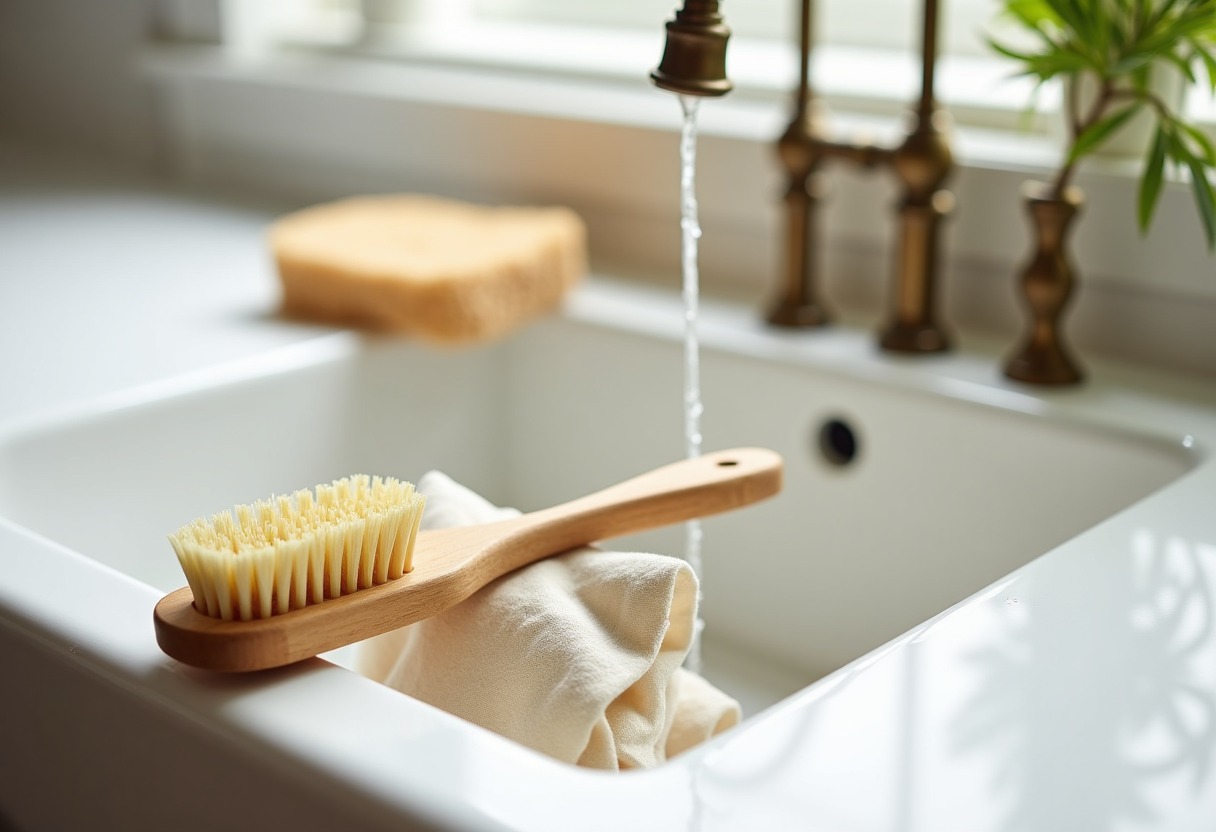
Your kitchen sponge is shedding microplastics into your dishwater with every squeeze, and those cellulose "eco" versions still contain synthetic binding agents that don't break down. Natural dish brushes made from bamboo, coconut fiber, and plant bristles scrub just as effectively, dry faster to resist bacteria, and fully decompose when their working life ends.
Why Natural Dish Brushes Beat Synthetic Sponges
Standard kitchen sponges contain polyurethane foam and synthetic fibers that fragment into microscopic particles during normal use. Research published by the USDA confirms that conventional cleaning tools contribute to household microplastic pollution, and those particles end up in wastewater systems.
Beyond environmental concerns, synthetic sponges create perfect breeding grounds for bacteria. Their dense, moisture-retaining structure harbors odor-causing microbes even after rinsing. Natural fiber brushes dry quickly between uses—typically within an hour compared to 12+ hours for foam sponges—which significantly reduces bacterial growth.
The functional difference shows up in real use. Plant-based bristles maintain stiffness when wet, providing consistent scrubbing power without the mushiness that synthetic sponges develop after a few weeks. Bamboo and wood handles resist warping and don't get slippery when soapy. When a natural brush wears out after 2-4 months of heavy use, you can compost the bristles and handle or burn them as kindling.
Material Options: What Works for Different Cleaning Tasks
Not all natural materials perform the same way. Coconut coir bristles excel at heavy scrubbing—baked-on casserole dishes, roasting pans, cast iron seasoning maintenance. The coarse fiber structure cuts through residue without scratching most cookware, though you'll want to avoid using it on nonstick surfaces or soft plastics.
Tampico fiber (from agave plants) offers medium stiffness that works well for everyday dish washing. It's softer than coconut but firmer than most synthetic alternatives, making it suitable for glassware, ceramics, and non-toxic cookware without scratching. Tampico absorbs water and soap efficiently, creating good lather with less product.
Bamboo handles dominate the natural brush market because the material naturally resists moisture damage and bacterial growth. Bamboo's dense structure doesn't splinter like conventional wood, and it reaches working hardness in 3-5 years compared to 20+ years for hardwoods. Look for handles with smooth, sealed finishes that won't develop rough patches.
For delicate items—wine glasses, crystal, soft plastics—seek out brushes with horsehair or plant cellulose bristles. These materials provide gentle cleaning without the abrasiveness of coir or sisal. I keep a separate soft-bristle brush specifically for my Best Cold Press Juicers 2026 parts, which have tight screens that need thorough but non-abrasive cleaning.
Natural Dish Brush Types Compared
| Brush Type | Best Use Cases | Typical Lifespan | Biodegradable | |------------|---------------|------------------|---------------| | Coconut coir scrubber | Cast iron, baking dishes, stuck-on food | 1-2 months | 100% compostable | | Tampico dish brush | Daily dishes, pots, pans, general cleaning | 3-4 months | Fully biodegradable | | Vegetable brush (stiff) | Root vegetables, potatoes, produce | 4-6 months | Compostable bristles & handle | | Soft bristle brush | Glassware, delicate items, juicer screens | 3-5 months | Biodegradable with proper disposal |
Recommended Natural Dish Brushes and Scrubbers
Bamboo dish brush with replaceable heads remains the most practical option for most kitchens. The handle lasts 2-3 years with proper care (hang to dry, never soak), and you simply swap in new bristle heads every few months. → Shop bamboo dish brushes on Amazon. Look for models where the head screws on rather than snaps—threaded connections hold more securely through repeated use.
Coconut coir scrub pads handle jobs that would shred conventional sponges. I keep a stack near my sink for cleaning my cast iron after making Best Dehydrator Recipes that involve oil-based marinades. These pads don't scratch seasoned iron but remove stuck-on bits effectively. When they wear out, they break down in compost within 6-8 weeks. → Shop coconut coir scrub brushes on Amazon.
Natural fiber dish cloths made from cotton, linen, or hemp replace paper towels and synthetic wipes for lighter cleaning tasks. Unlike microfiber cloths (which shed synthetic particles), these materials wash clean in hot water and last through 100+ laundry cycles before composting. They pair well with Natural Dish Soap Alternatives for wiping counters and drying dishes.
Wooden vegetable brushes serve double duty—scrubbing produce and cleaning kitchen tools. The firm bristles remove soil from root vegetables without damaging skins, then clean the exterior of storage containers and cutting boards. → Shop wooden vegetable brushes on Amazon. Keep one dedicated to produce only to avoid cross-contamination.
Compostable dish sponges from wood pulp cellulose work for people who prefer the familiar sponge format. These compress flat when dry (reducing bacteria growth) and expand when wet. They lack synthetic binders, so they fall apart faster than conventional sponges—expect 2-3 weeks of use—but they break down completely in compost. → Shop compostable dish sponges on Amazon.
Extending Brush Life and Maintaining Cleanliness
Proper storage dramatically affects how long natural brushes last. Hang brushes bristle-down using a wall-mounted holder or suction hook so water drains away from the handle. Never let brushes sit in standing water or in a dark cabinet—moisture and lack of airflow encourage mold growth and wood deterioration.
Weekly sanitizing keeps brushes hygienic without harsh chemicals. Pour boiling water over bristles for 30 seconds, or soak in white vinegar diluted 1:1 with water for 10 minutes. Both methods kill bacteria and remove odors. I sanitize my dish brushes right after cleaning my Best Juicers Raw Vegan 2026, since produce residue can harbor more bacteria than cooked food.
Bristle maintenance extends functionality. When natural bristles splay outward or develop a curved shape, reshape them by soaking in hot water for 5 minutes, then press flat under a weight (like a cutting board) while they dry. This works 2-3 times before bristles lose their structure permanently.
Handle care prevents premature failure. Wipe bamboo or wood handles with mineral oil every 4-6 weeks to prevent cracking. If rough spots develop, sand lightly with 220-grit sandpaper and re-oil. This simple maintenance can double a handle's useful life, making replaceable-head brushes economically competitive with disposable options.
Rotate between two brushes to give each one complete drying time between uses. This approach reduces bacterial buildup and extends brush life significantly. I keep one for heavy scrubbing and one for everyday dishes, alternating daily so each gets 24 hours to dry thoroughly.
What Most Guides Don't Tell You
Natural brushes require a learning curve if you're switching from synthetic sponges. The bristles feel stiffer initially and don't create the same immediate lather. Use slightly more Natural All Purpose Cleaners or soap for the first week while bristles soften through use. After breaking in, they'll work more efficiently than they did initially.
Not all "natural" brushes decompose fully. Some manufacturers use metal staples or plastic-coated wire to secure bristles, rendering the brush only partially compostable. Check product descriptions specifically for "100% compostable" or examine photos closely for metal components. Truly biodegradable brushes use natural glue, wooden pins, or wire made from untreated metal that will rust harmlessly in compost.
Temperature matters for natural materials. Don't put bamboo or wood brushes in the dishwasher—the prolonged heat exposure causes wood to crack and bristle adhesives to fail. Hot water from the tap is fine; sustained heat above 140°F damages structure.
Bristle firmness changes with use. Coconut coir softens by about 30% after two weeks of regular use, becoming gentler while maintaining scrubbing power. If you're buying specifically for heavy-duty cleaning, the initial stiffness provides maximum effectiveness. For gentler tasks, consider breaking brushes in on tougher jobs first, then demoting them to daily dish duty.
The real cost calculation surprises most people. Quality replaceable-head bamboo brushes run $12-15 initially with $4-5 replacement heads. If you buy conventional sponges at $3-4 for a three-pack and replace monthly, you'll spend $12-16 per year. The bamboo system costs about $20 the first year (handle plus 3-4 replacement heads) then $16-20 annually for heads only. Environmental benefit aside, they reach cost parity within 18 months while performing better throughout their life.
Frequently Asked Questions
Do natural dish brushes actually clean as well as synthetic sponges? Natural brushes clean more effectively for most tasks because firm bristles maintain scrubbing power when wet, unlike foam sponges that compress and lose effectiveness. The key is matching bristle type to cleaning task—coconut coir for heavy jobs, tampico for everyday use.
How do I prevent mold on natural brushes? Store brushes bristle-down in a holder that allows complete air circulation, and never leave them sitting in water or enclosed in cabinets. Weekly sanitizing with boiling water or vinegar prevents mold establishment even in humid kitchens.
Can I put natural dish brushes in the dishwasher? No. Dishwasher heat exceeds the temperature tolerance of natural adhesives and bamboo, causing bristles to shed and handles to crack. Hand wash and hang to dry instead for maximum longevity.
What's the difference between bamboo and wood handles? Bamboo reaches working density faster than hardwoods and naturally resists moisture damage without sealants. Conventional wood handles require more maintenance (regular oiling) and eventually develop rough patches or splinters that bamboo typically avoids.
Are natural dish brushes safe for nonstick cookware? Soft-bristle brushes made from tampico or horsehair work safely on nonstick surfaces, but avoid coconut coir or sisal scrubbers that can scratch coatings. Always test on an inconspicuous area first and use gentle pressure on any nonstick finish.
Plastic dish tools made sense before we understood microplastic pollution and had access to functional natural alternatives—now they're an unnecessary compromise that costs more over time while performing worse at their basic job.
Some links on this page are affiliate links. We may earn a small commission if you purchase through them, at no extra cost to you.
As an Amazon Associate we earn from qualifying purchases. This article contains affiliate links; if you buy through them we may earn a small commission at no additional cost to you.