Pre-ground coffee loses up to 60% of its aromatic compounds within 15 minutes of grinding, according to research from the Specialty Coffee Association. The grinder you choose determines whether you're drinking fresh coffee or stale powder — and whether plastic particles end up in your cup.
Why Your Grinder Material Matters More Than You Think
Most budget grinders use plastic hoppers, plastic grounds containers, and plastic-coated burrs. When coffee beans pass through at high friction, they generate heat. That heat plus the mechanical stress means micro-plastic particles can end up in your grounds. You won't see them, but they're there.
Natural coffee grinders use ceramic burrs, stainless steel components, and glass catch containers. The materials matter because coffee oils are acidic and extract compounds from whatever they touch. Glass and ceramic are inert — they don't leach. Stainless steel is stable and non-reactive when properly finished.
Burr grinders outperform blade grinders because they produce consistent particle size. Consistency affects extraction: uniform grounds mean even flavor development. Blade grinders chop beans randomly, creating both powder and chunks. You end up with over-extracted bitterness from the fines and under-extracted sourness from the large pieces in the same cup.
Manual grinders give you full control without electricity or motor heat. Electric burr grinders save time but generate more heat during grinding. For single-origin beans or specialty roasts where subtle flavor differences matter, many people notice the difference.
Manual vs Electric: Grind Speed and Heat Generation
Hand-cranked grinders take 30-60 seconds for enough grounds to brew one cup. Electric burr grinders finish the same amount in 8-12 seconds. That speed difference comes with trade-offs.
Fast grinding generates more heat. When burrs spin at high RPM, friction raises the temperature of your grounds. Even a 10-degree temperature increase can cause volatile aromatic compounds to evaporate before brewing. Manual grinders keep beans cooler because the grinding process happens slowly.
If you brew multiple cups daily or make cold brew concentrate that needs 1-2 cups of grounds at once, an electric grinder becomes practical. If you make single cups and value the ritual of hand-grinding, manual works well. Neither choice is wrong — match the tool to your habits.
→ Shop manual burr coffee grinder on Amazon
Ceramic vs Stainless Steel Burr Material
| Burr Material | Heat Generation | Durability | Maintenance | Best For | |---------------|----------------|------------|-------------|----------| | Ceramic | Minimal — stays cool during grinding | Can chip if foreign objects enter | Occasional brush cleaning | Light to medium roasts, daily home use | | Stainless Steel | Moderate — conducts some heat | Extremely durable, no chipping risk | Regular cleaning to prevent oil buildup | Dark roasts, heavy use, commercial settings | | Coated Steel | Low to moderate depending on coating | Coating can wear over time | Clean carefully to preserve coating | Budget-conscious buyers | | Stone/Granite | Minimal heat transfer | Heavy, brittle if dropped | Difficult to disassemble for deep cleaning | Traditional espresso, specialty brewing |
Ceramic burrs won't rust, don't conduct heat, and handle most home grinding needs. They're lighter than steel, which makes manual grinding easier. The trade-off: drop a manual grinder with ceramic burrs and you might crack them. Stainless steel burrs survive drops and last decades with proper cleaning.
For electric grinders, ceramic burrs reduce motor strain because they're lighter. Stainless steel burrs work harder but handle oily dark roasts better — oils don't clog steel the way they can gum up ceramic.
Top Natural Coffee Grinder Types Worth Considering
Manual Ceramic Burr Grinders with Glass Jars
These combine hand-crank operation with ceramic conical burrs and tempered glass catch containers. The Hario Skerton and Timemore models fit this category. Glass lets you see exactly how much you've ground, and you can store grounds temporarily without transferring to another container. Grind settings adjust by twisting the burr assembly — most offer 12-18 distinct settings from Turkish-fine to French press coarse.
→ Shop ceramic burr grinder on Amazon
Stainless Steel Body Manual Grinders
Built like small mills with stainless exteriors and either ceramic or steel burrs inside. The 1Zpresso and Comandante styles fall here. These grinders focus on grind consistency for espresso and pour-over brewing. Stainless bodies are practically indestructible and maintain grind setting accuracy better than plastic-bodied grinders. The weight makes them stable during grinding but less portable than lighter models.
Electric Burr Grinders with Minimal Plastic
Finding a completely plastic-free electric grinder is difficult — motors need housing and many use plastic drive components. Look for models where ground coffee never touches plastic: stainless or ceramic burrs, metal grind chamber, and either glass or stainless catch container. The Baratza Encore and Breville Smart Grinder Pro reduce plastic contact, though they're not entirely plastic-free. Some higher-end models like the Fellow Ode use minimal plastic only in exterior housing, keeping the grind path metal and ceramic.
→ Shop electric burr grinder stainless steel on Amazon
Traditional Hand-Crank Coffee Mills
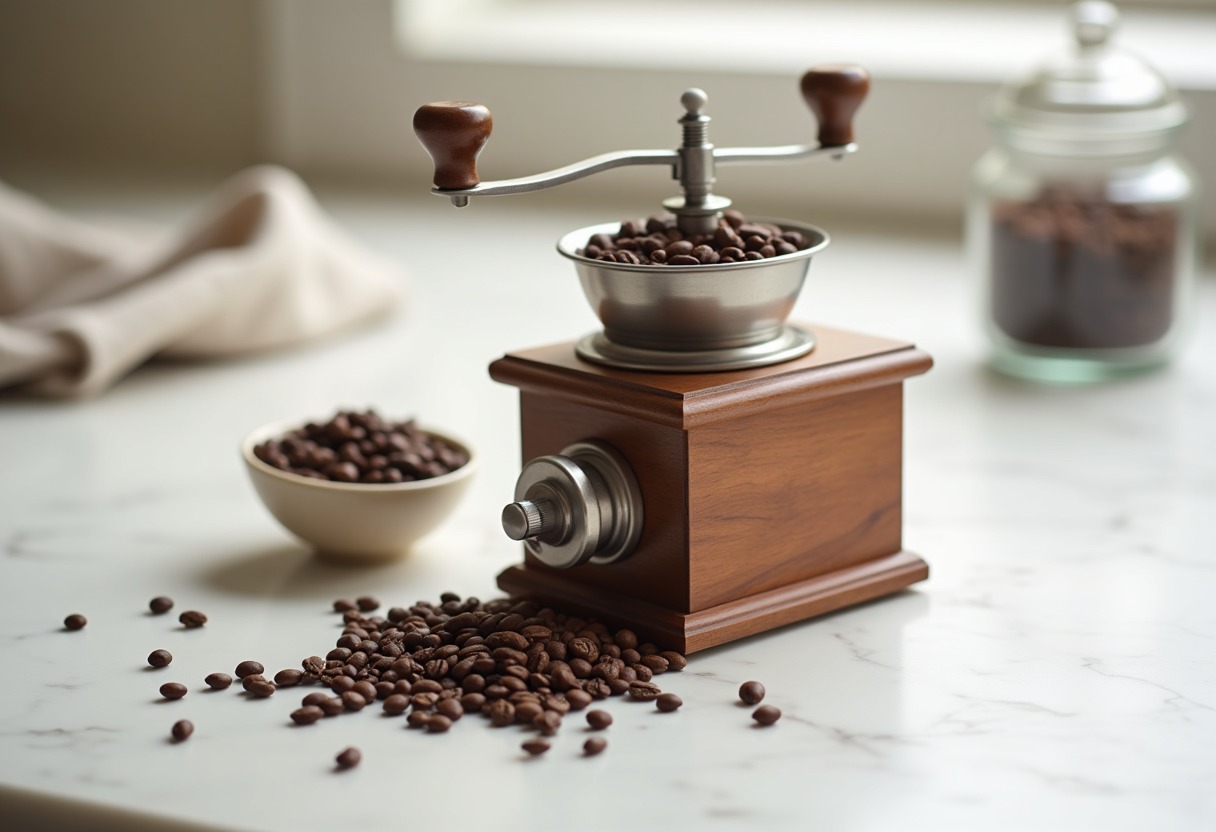
Vintage-style wooden or metal box grinders with a drawer that catches grounds. These use either ceramic or steel burrs and were standard before electric grinders existed. You'll find reproductions of Turkish, Greek, and French mill designs. They're slower than modern manual grinders and harder to adjust, but they contain zero plastic and last for generations. Some people use these specifically for their morning ritual rather than pure efficiency.
→ Shop hand crank coffee mill on Amazon
Portable Manual Grinders for Travel
Compact manual grinders small enough for a backpack or suitcase. JavaPresse and Porlex make popular versions with ceramic burrs and stainless bodies. These prioritize portability over grind capacity — most hold 20-25 grams of beans, enough for one strong cup or two lighter ones. They're perfect if you travel with whole beans and don't trust hotel coffee. Similar to how Natural Food Storage Containers Guide helps you maintain food quality on the go, a portable grinder preserves coffee freshness when you're away from home.
What Most Coffee Guides Don't Tell You About Burr Alignment
Burr alignment affects grind consistency more than burr material. Misaligned burrs create uneven particle distribution even if they're expensive ceramic or steel. You'll taste the difference: some grounds over-extract while others under-extract, creating muddy or sour notes in the same cup.
Check alignment by grinding a small amount and examining the grounds under bright light. They should look uniform, without excessive fines (powdery dust) mixed with boulders (large chunks). If you see wide variation, the burrs aren't parallel.
Manual grinders let you adjust alignment by tightening or loosening the burr mount. Electric grinders require more involved calibration — some brands sell shims for micro-adjustments. This is why mid-range grinders often outperform cheap ones with the same burr material: better manufacturing tolerances mean proper alignment from the factory.
Seasoning new burrs improves consistency. Run 1-2 pounds of inexpensive beans through a new grinder and discard them. This process smooths microscopic rough spots on burr surfaces and seats the burrs into their final alignment. Your fourth cup will taste noticeably better than your first.
Static buildup causes grounds to stick inside the grinder or fly out when you remove the catch container. A drop of water on beans before grinding reduces static significantly — just enough moisture to coat the surface, not soak them. This works for both manual and electric grinders. The grounds flow cleanly and you waste less coffee.
If you're building a whole-foods kitchen with equipment that matches your values, your grinder sits alongside your Best Raw Vegan Blenders 2026 and Non Toxic Cookware Guide choices. Each tool either supports or undermines the quality of what you make.
FAQ
How long do whole coffee beans stay fresh after opening the bag?
Whole beans maintain peak flavor for 2-3 weeks after roasting when stored in an airtight container away from light and heat. After that, they're still drinkable but aromatic compounds fade noticeably. Buy smaller quantities more frequently rather than bulk-buying beans that sit for months.
Can you grind coffee beans in a regular blender?
Technically yes, but you'll get inconsistent chunks and powder rather than uniform grounds. Blenders chop randomly like blade grinders. The result is uneven extraction and inferior flavor compared to proper burr grinding. If you already own a quality blender for recipes from Best Dehydrator Recipes or How To Make Nut Milk, save it for those tasks and get a dedicated grinder for coffee.
What grind size should you use for different brewing methods?
Coarse for French press and cold brew (about the texture of sea salt), medium for drip coffee makers and pour-over (like sand), fine for espresso (between sand and powder). Finer grinds extract faster because more surface area contacts water. Match grind to brewing time: longer brew times need coarser grinds to avoid over-extraction.
Do coffee grinders need regular cleaning?
Yes — oils from beans build up on burrs and create rancid flavors. Brush out loose grounds after each use. Deep clean monthly by disassembling the burr chamber and washing removable parts with warm water and mild soap. Dry completely before reassembling. Never use soap on burrs themselves — just brush and wipe them clean.
Are expensive grinders worth the cost difference?
Higher-end grinders offer better burr alignment, more grind settings, and tighter manufacturing tolerances. If you drink coffee daily and taste the difference between good and excellent extraction, the investment pays off. If coffee is morning fuel rather than a sensory experience, mid-range burr grinders deliver 90% of the performance at 40% of the cost.
Some links on this page are affiliate links. We may earn a small commission if you purchase through them, at no extra cost to you.
As an Amazon Associate we earn from qualifying purchases. This article contains affiliate links; if you buy through them we may earn a small commission at no additional cost to you.