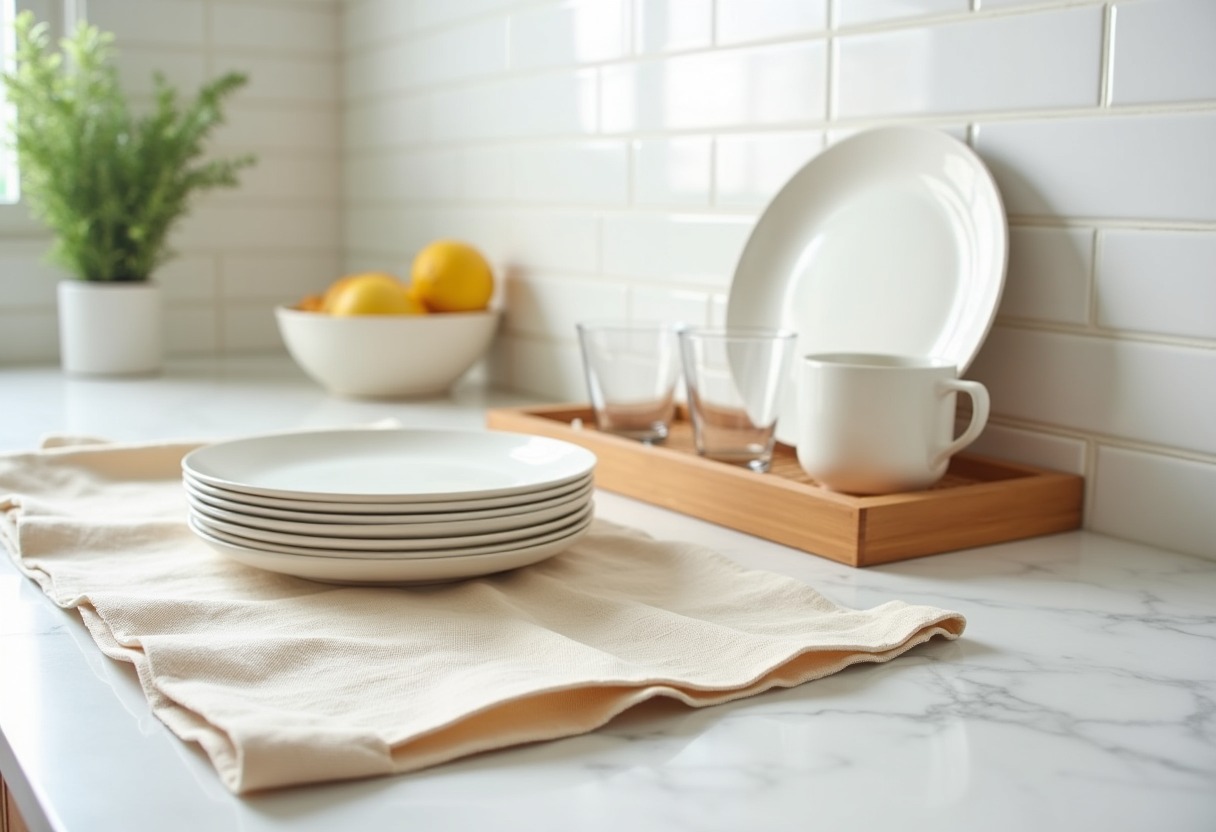
That plastic dish rack beside your sink has probably been there longer than you care to admit — water pooling in the corners, white residue building up where the prongs meet the base, that faint mildew smell you keep trying to scrub away. The mat underneath fares no better: synthetic, impossible to fully dry, harboring bacteria in its foam layers despite your best efforts.
Switching to natural dish drying mats and racks isn't just about removing another piece of plastic from your kitchen. These materials — bamboo, untreated wood, pure linen, diatomaceous earth — actually perform better at the one job they're designed for: drying dishes while staying dry themselves.
Why Natural Materials Handle Moisture Better Than Plastic
Plastic dish racks create their own problems. Water sits in molded crevices, providing perfect conditions for bacterial growth and biofilm formation. Those rubber-coated wires trap moisture against metal frames, leading to rust. The coatings themselves degrade over time, flaking into your clean dishes.
Natural materials work with water instead of trapping it. Bamboo wicks moisture away from dish surfaces through its natural grain structure. Linen fibers absorb water then release it to air efficiently — the same reason linen dish towels have been kitchen standards for centuries. Diatomaceous earth, formed from fossilized algae, contains microscopic pores that pull water from surfaces through capillary action, then release it through evaporation at rates plastic can't match.
Wood and bamboo racks elevate dishes above any standing water. The open-grain structure means air circulates freely around every surface. Compare this to plastic racks where dishes lean against solid barriers, creating sealed pockets where moisture has nowhere to go.
The shift matters for kitchen hygiene. A study published in the Journal of Food Protection identified dish drying areas as high-risk zones for cross-contamination when materials retain moisture. Natural options that dry completely between uses break that cycle.
Material Breakdown: What Works Where
Bamboo racks handle heavy daily use. The material resists warping even with constant moisture exposure, and natural silica content makes it harder than most hardwoods. Look for racks with removable slat trays — you can lift them out for periodic deep cleaning and full drying. Expect 3-5 years of regular use before you need to replace them.
Untreated wood racks — typically beech, maple, or acacia — bring warmth to your counter but require more attention. Monthly oiling with food-grade mineral oil prevents cracking. They're best for households that hand-wash dishes once or twice daily rather than running constant loads. Wood naturally contains antimicrobial compounds, but only if you maintain the finish properly.
Linen dish mats work beautifully for delicate items: wine glasses, ceramic bowls, anything that shouldn't sit in a rack. Pure linen — not linen-cotton blends — absorbs up to 20% of its weight in water while still feeling relatively dry to the touch. Toss them in a hot wash with your dish towels weekly. They last years if you avoid fabric softener, which coats fibers and reduces absorbency.
Diatomaceous earth mats feel like smooth stone. They absorb water from dish bottoms within seconds, making them ideal for pots, cutting boards, and anything with a flat base. The material doesn't mold or mildew, but hard water can leave mineral deposits on the surface. A light sand with fine-grit paper every few months keeps them functioning perfectly.
Pairing natural mats with Best Natural Dish Brushes and Natural Dish Soap Alternatives creates a fully plastic-free washing station.
Comparison: Natural Dish Drying Options
| Material | Best For | Absorption Speed | Maintenance | Lifespan | |----------|----------|------------------|-------------|----------| | Bamboo rack | Full dish loads, daily use | N/A (elevation-based) | Wipe down weekly | 3-5 years | | Wood rack | Moderate use, visible storage | N/A (elevation-based) | Oil monthly | 5-7 years with care | | Linen mat | Glassware, bowls, light items | Fast (2-3 minutes) | Machine wash weekly | 2-4 years | | Diatomaceous earth mat | Pots, cutting boards, flat items | Very fast (under 1 minute) | Wipe/sand as needed | 5+ years |
Specific Product Types Worth Finding
Two-tier bamboo dish racks maximize counter space without sprawling across your entire workspace. The upper tier holds cups and glasses upside-down, lower tier accommodates plates standing on edge. → Shop bamboo dish drying rack on Amazon. Look for models with separate utensil holders that drain independently — water doesn't pool around your clean forks.
Heavyweight linen dish mats in the 280-320 GSM range (grams per square meter) absorb substantially more than lightweight versions marketed as "quick-dry." French linen or Belgian linen typically hits this weight. → Shop linen dish drying mat on Amazon. Hem-stitched edges hold up better to weekly washing than rolled hems.
Beechwood folding dish racks collapse flat when not in use — useful in small kitchens where permanent counter fixtures don't work. → Shop wood dish rack on Amazon. The folding mechanism is the weak point; check that joints are reinforced with brass hardware, not just glue.
Diatomaceous earth mats with cork backing won't slide on wet counters. The cork also prevents any moisture that does make it through the mat from sitting against your counter surface. → Shop diatomaceous earth dish mat on Amazon. Standard size is 12x16 inches — adequate for most cutting boards and medium pots.
Stainless steel drainers with wood bases combine the durability of metal with natural aesthetics. The wood catches any drips while the steel rack holds dishes. → Shop stainless steel dish drainer on Amazon. Make sure the steel is 18/8 grade minimum to prevent rust, and that the wood base removes easily for cleaning.
Similar material considerations apply when choosing Non Toxic Cutting Boards Guide and Natural Food Storage Containers Guide — the whole ecosystem benefits when materials can actually dry properly between uses.
Setup Details That Prevent Problems
Position your drying rack or mat at least 6 inches from the sink edge. Dishes drip when you first place them down; that initial runoff needs to hit the rack, not your counter. An absorbent mat placed under bamboo or wood racks catches these drips before they spread.
For bamboo racks, elevate them on small silicone bumpers or cork feet. This creates an air gap underneath, allowing the bottom slats to dry completely. Without this gap, moisture gets trapped between the rack and counter, causing the wood to darken and eventually split.
Rotate linen mats daily if you use them heavily. Keep two in rotation: one in use, one washed and drying. Linen dries quickly when hung — usually 4-6 hours in normal humidity. Hanging them also prevents the creases that form when you fold them wet.
Diatomaceous earth mats need air circulation on both sides. Prop them vertically against your backsplash after dishes are put away, or store them in a dish rack slot rather than laying them flat in a drawer. Trapped moisture, even minimal amounts, creates surface staining over time.
Clean bamboo and wood racks monthly with straight white vinegar. Spray thoroughly, let sit 10 minutes, wipe clean, then allow to air-dry completely before reusing. This prevents mineral buildup and removes any soap residue that accumulates in the grain. The same vinegar approach works well for maintaining Non Toxic Cookware Guide items.
For households processing lots of fresh produce — especially those following Raw Food Starter Guide principles or working through Best Dehydrator Recipes — multiple drying stations make sense. One dedicated rack for equipment like Best Cold Press Juicers 2026 or Best Raw Vegan Blenders 2026 parts keeps them separate from dish rotation.
What Most Guides Miss: Seasonal Adjustments
Natural materials respond to humidity changes. Your bamboo rack that dries perfectly in winter might feel slightly damp by morning in August. This isn't a defect — it's physics.
Summer strategy: increase air circulation. Point a small fan across your drying area if your kitchen tends to trap humid air. Alternatively, move your drying setup closer to a window where cross-breeze helps. Some people switch entirely to linen mats in summer months since they can be machine-dried when ambient air isn't doing the job.
Winter brings opposite challenges. Heated indoor air drops humidity levels dramatically, which can cause untreated wood racks to crack. This is when monthly oiling becomes essential. Check bamboo racks for small splits along the grain — catching them early means a bit of food-grade wood glue prevents bigger problems.
Diatomaceous earth mats actually perform best in winter. Lower humidity means faster evaporation from the mat surface, so even large pots dry quickly. In summer humidity, these mats can feel perpetually cool to the touch as they hold moisture longer — still functional, just slower.
Geographic considerations matter. Desert climates are ideal for all natural drying materials — everything dries fast. Coastal or tropical regions need more active rotation and cleaning schedules. If you live somewhere genuinely humid year-round, bamboo racks with maximum airflow design work better than solid wood options.
FAQ
How long do bamboo dish racks actually last before they need replacing?
Most quality bamboo racks give 3-5 years of daily use. You'll know it's time when the slats start to warp noticeably or dark water stains won't come out with vinegar cleaning. Cheaper bamboo shows wear around the 18-month mark — the material is often lower quality or inadequately treated.
Can you put linen dish mats in the dryer?
Yes, but skip fabric softener and dryer sheets completely. High heat is fine — actually helps kill bacteria — but softeners coat the fibers and destroy absorbency permanently. Many people air-dry them anyway since linen dries so quickly on its own.
Do diatomaceous earth mats work for wine glasses and delicate stemware?
Not ideally. The hard surface can chip thin glass rims if you're not extremely careful placement. Linen mats or dedicated bamboo racks with padded cup holders work better for anything fragile.
How do you clean mildew off a wood dish rack once it's started?
Sand the affected area lightly with 220-grit sandpaper, wipe clean, then treat with hydrogen peroxide. Let it sit 20 minutes, rinse thoroughly, and allow to dry completely before oiling. If mildew has penetrated deep into the grain, replacement is usually more practical than restoration.
Can natural dish racks handle cast iron pans and heavy cookware?
Bamboo handles weight well — most two-tier racks support up to 30 pounds total. Wood racks vary by construction; check specifications. Diatomaceous earth mats work perfectly under cast iron since they absorb any residual moisture from seasoning oil. Just make sure your cookware is properly maintained following Non Toxic Cookware Guide principles.
The Bottom Line
Natural dish drying setups work because they were designed around materials that handle moisture properly, not materials that are cheap to mold in factories. Bamboo, linen, wood, diatomaceous earth — each solves the actual problem of getting dishes dry while staying sanitary themselves.
Some links on this page are affiliate links. We may earn a small commission if you purchase through them, at no extra cost to you.
As an Amazon Associate we earn from qualifying purchases. This article contains affiliate links; if you buy through them we may earn a small commission at no additional cost to you.